

One of the dominant narratives around falling rents in the Greater Toronto Area is that Canada's population is shrinking — in particular, the number of non-permanent residents. While that's true, and rental demand is undoubtedly lower than it would have been without that decline, the narrative misses something important: rental transactions in the GTA are at an all-time high.
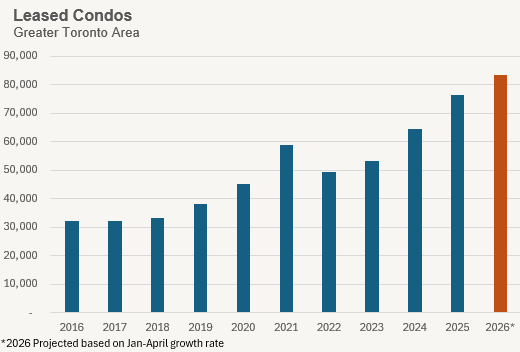
Between 2016 and 2019, the GTA typically saw 30,000 to 40,000 condo lease transactions per year. In 2024, that number climbed to roughly 65,000. In 2025, it hit 77,000. And based on the first four months of this year, 2026 is on track for approximately 84,000 leased condos — more than double the pre-pandemic norm.
So if population growth is slowing, what's driving this surge in rental demand?
The Supply Story Is Only Half of It
Yes, the supply of available rental units has increased — new condo completions have been above average, and more purpose-built rental stock is coming online. But supply alone doesn't explain why so many more tenants are signing leases.
Cratering Home Sales Are Pushing Demand Into Rentals
I believe the real driver is the cratering demand for resale home purchases — both houses and condos.
GTA resale home sales have been at 20-year lows for three consecutive years. People haven't stopped buying because they no longer need housing. They've stopped buying because they're anxious about the future path of home prices. In this environment, a household that could afford to buy is more inclined to rent and wait out the market.
In short, when home sales plummet, housing demand doesn't disappear — it transfers to the rental market.
The GTA resale market typically sees close to 90,000 home sales per year. Last year, we saw just 62,000. That gap of roughly 28,000 transactions represents households that still need somewhere to live — and many of them are renting.
Two Things the Market Is Missing
First, the decline in rents we're seeing isn't just a function of elevated new supply. It's happening during a period where lease transactions are running well above historical averages. Rents are falling even though demand, as measured by actual leasing activity, is at record levels.
Second — and more importantly — Canada is in the midst of a surge in rental construction that will add a significant number of new units over the next few years. The question the market should be asking is: what happens when more households shift back to buying instead of renting?
If resale demand returns to historical levels, a meaningful portion of that shift will show up as a decline in rental demand. Today's elevated leasing volumes are not the new normal. They're a reflection of a stalled ownership market, and when that market eventually recovers, the rental side of the equation will look very different.
John Pasalis is President of Realosophy Realty. A specialist in real estate data analysis, John’s research focuses on unlocking micro trends in the Greater Toronto Area real estate market. His research has been utilized by the Bank of Canada, the Canadian Mortgage and Housing Corporation (CMHC) and the International Monetary Fund (IMF).
Have questions about your own moves in the Toronto area as a buyer, seller, investor or renter? Book a no-obligation consult with John and his team at a Realosophy here: https://www.movesmartly.com/meetjohn
Published: May 21, 2026