



GTA Housing Market Update – February 2025
Sort of.
If you zoom out and look at the GTA as a whole, the housing market is still off to a very slow start in 2026. The first two months of the year have come in well below historical norms. Activity remains muted, and nothing in the broader data suggests a meaningful turn in the market.
One interesting development, though, is on the supply side.
New listings for both houses and condos are down double digits compared to last year. That’s not something we’ve seen consistently over the past couple of years, where inventory has generally been elevated. It’s too early to call it a trend; we’ll need to see what happens as we move deeper into the spring, but it’s worth watching. If sellers become more hesitant while buyer activity stabilizes, that balance could shift at the margins.
For now, however, the broader market still reflects slower demand and softer pricing compared to a year ago.
And yet, that’s not what everyone is experiencing.
In a handful of neighbourhoods in Toronto, the market feels intensely competitive. A large share of homes are selling over asking. Many are selling quickly. Some are attracting pre-emptive offers within days of hitting the market.
These areas are not new to competition. Certain neighbourhoods — particularly those with strong schools, limited turnover, and a specific type of family-oriented housing — almost always perform better than the regional average.
What stands out this year isn’t that they’re competitive.
It’s how far ahead of the broader market they are.
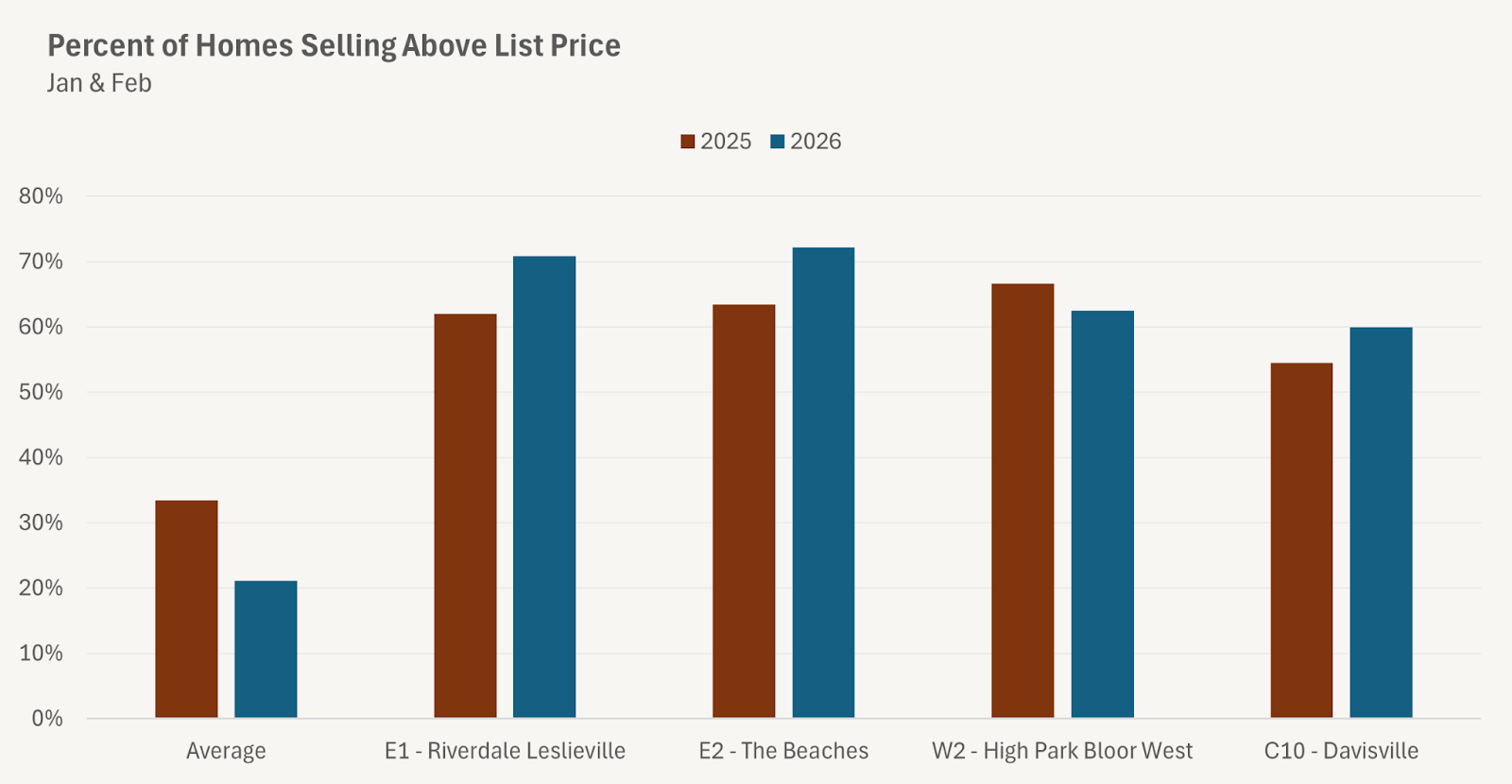
Last year, these same neighbourhoods were also outperforming the GTA average. But the overall market was stronger then. A much larger share of homes across the region were selling over asking, which meant the gap between these neighbourhoods and the rest of the market was narrower.
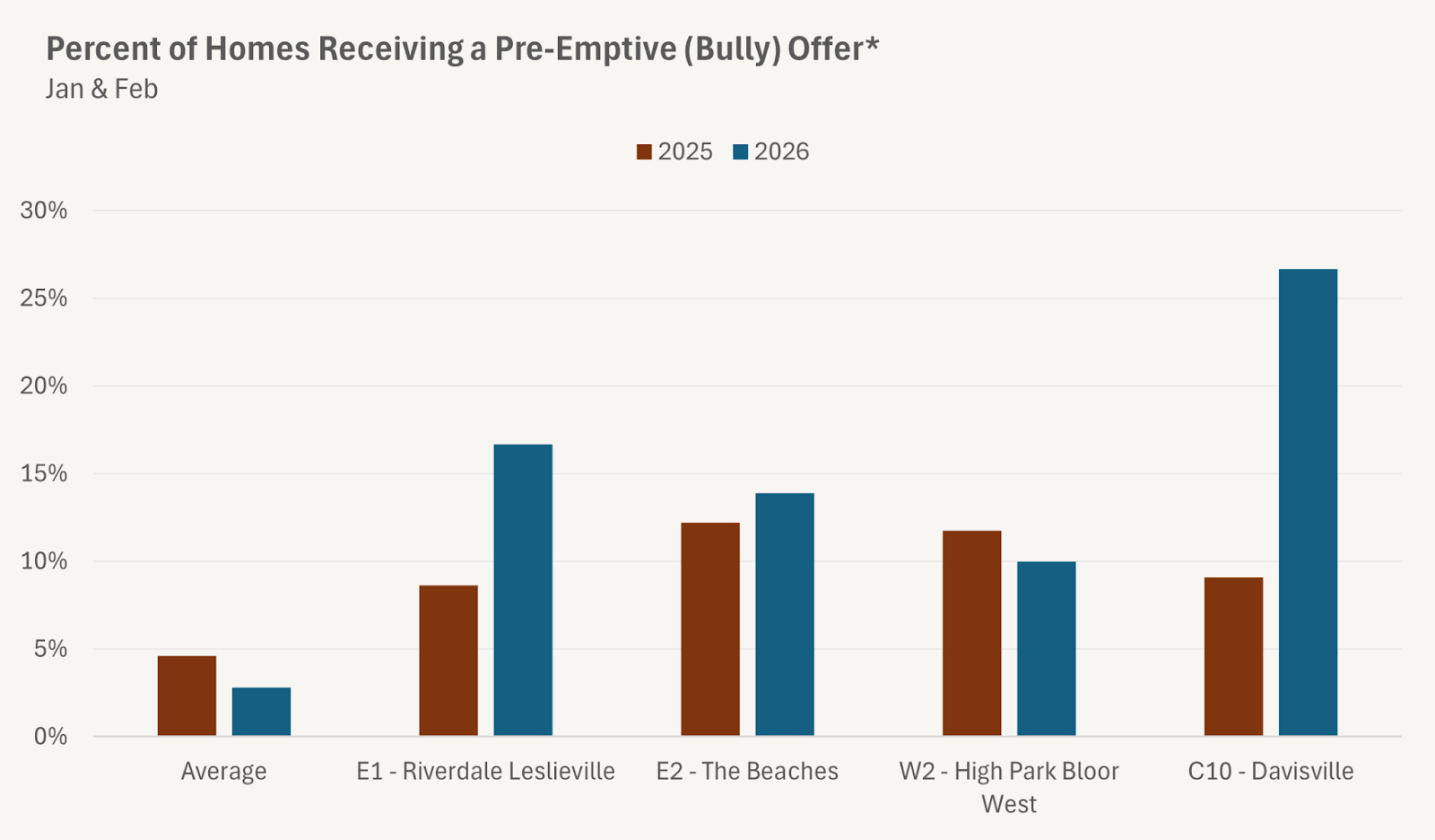
Today, the broader market has cooled considerably. Yet these pockets remain active. The divergence between them and the rest of the GTA is wider than it was a year ago, and that’s what’s making the experience feel so different.
If you’re trying to buy in one of these areas, it doesn’t feel like a slow market. But that doesn’t mean the entire market has turned.
What we’re seeing is localized imbalances in supply and demand.
The spring market effectively begins in January and February. Buyers tend to start their search early in the year, while listings are still relatively limited. If demand becomes concentrated in a specific neighbourhood, you can temporarily get bidding wars even in a broader buyer’s market.
As we move further into the spring, more listings typically come to market. Some buyers exit after purchasing. That imbalance often moderates.
The broader takeaway is that Toronto’s housing market isn’t moving uniformly.
Region-wide, conditions remain slow by historical standards. But at the neighbourhood level, the story can look very different, and right now, the gap between those stories is wider than usual.
January at a Glance
Houses
Sales were down 4% over last year.
New listings were down 16%.
Active listings were unchanged.
Months of Inventory decreased to 4.6.
Average price: $1,241,047, down 8%.
Median price: $1,065,000, down 8%.
Condos
Sales were down 8% over last year.
New listings were down 20%.
Active listings were down 6%.
Months of Inventory decreased to 6.6.
Average price: $655,664, down 8%.
Median price: $588,800, down 7%.
Monthly Statistics
House Statistics
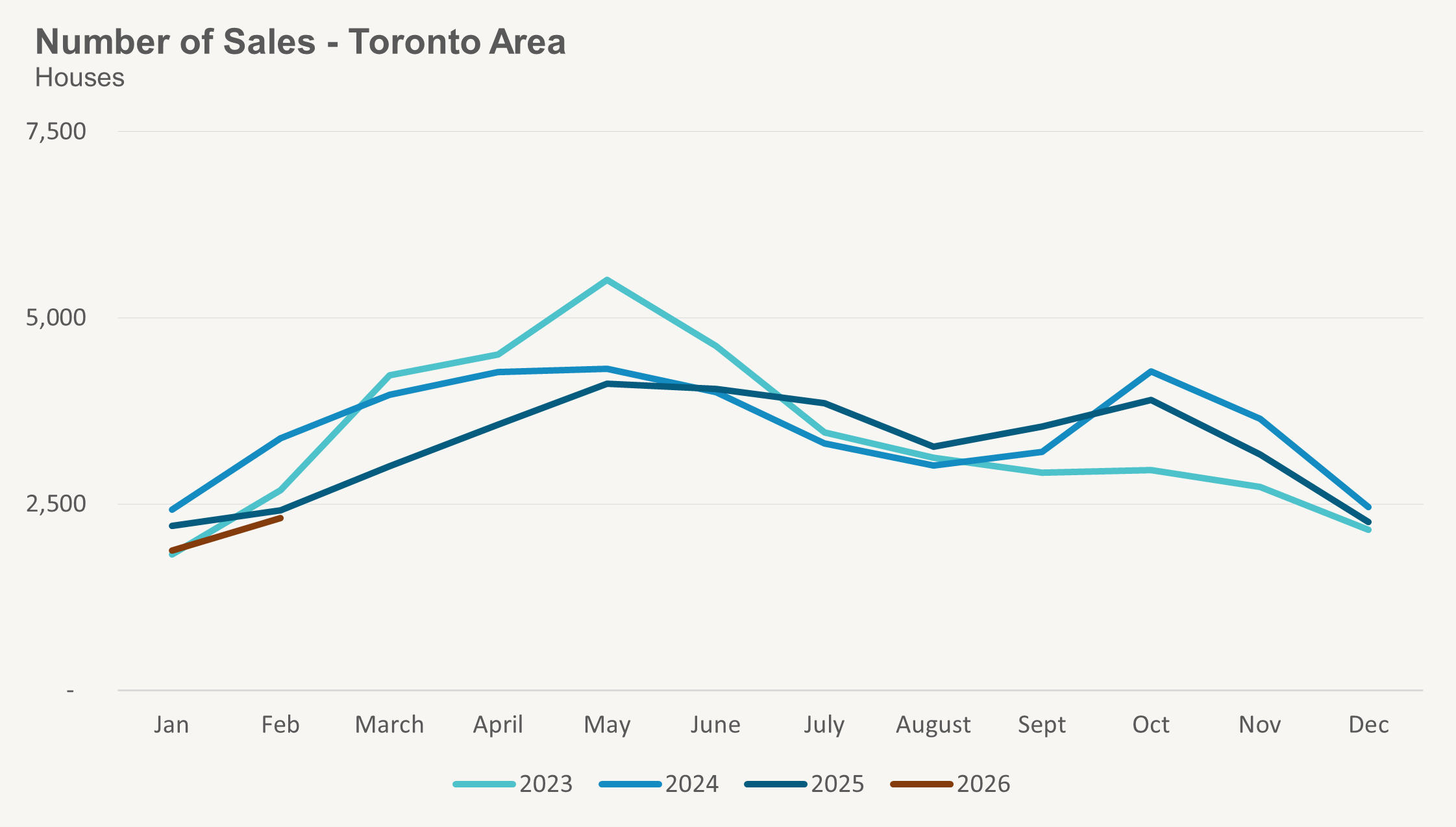
House sales (low-rise freehold detached, semi-detached, townhouse, etc.) in the Greater Toronto Area (GTA) in January 2025 were down 4% compared to the same month last year.
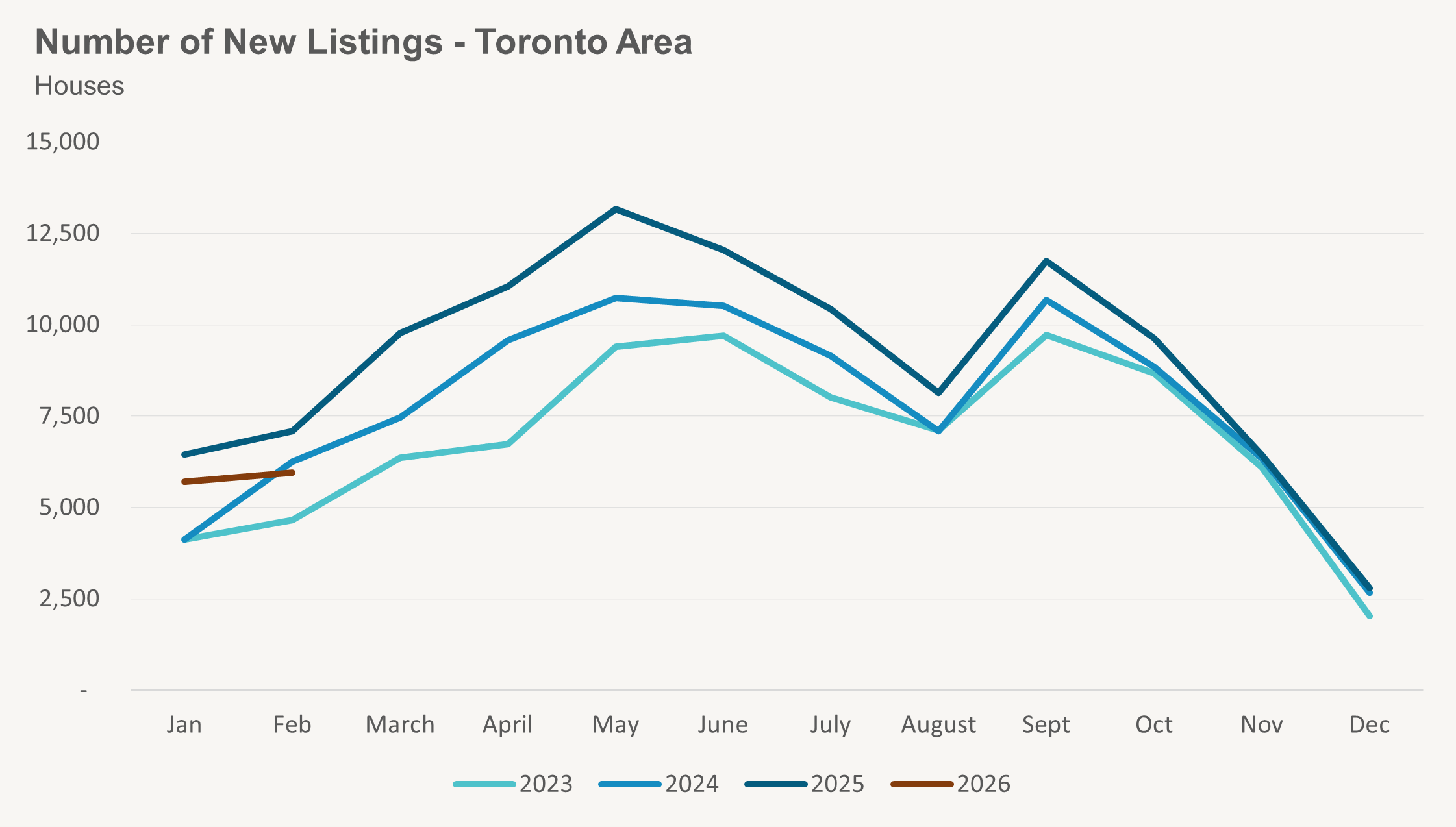
New house listings in January were down 16% compared to last year.
The number of houses available for sale (“active listings”) was up 13% in January compared to the same month last year.
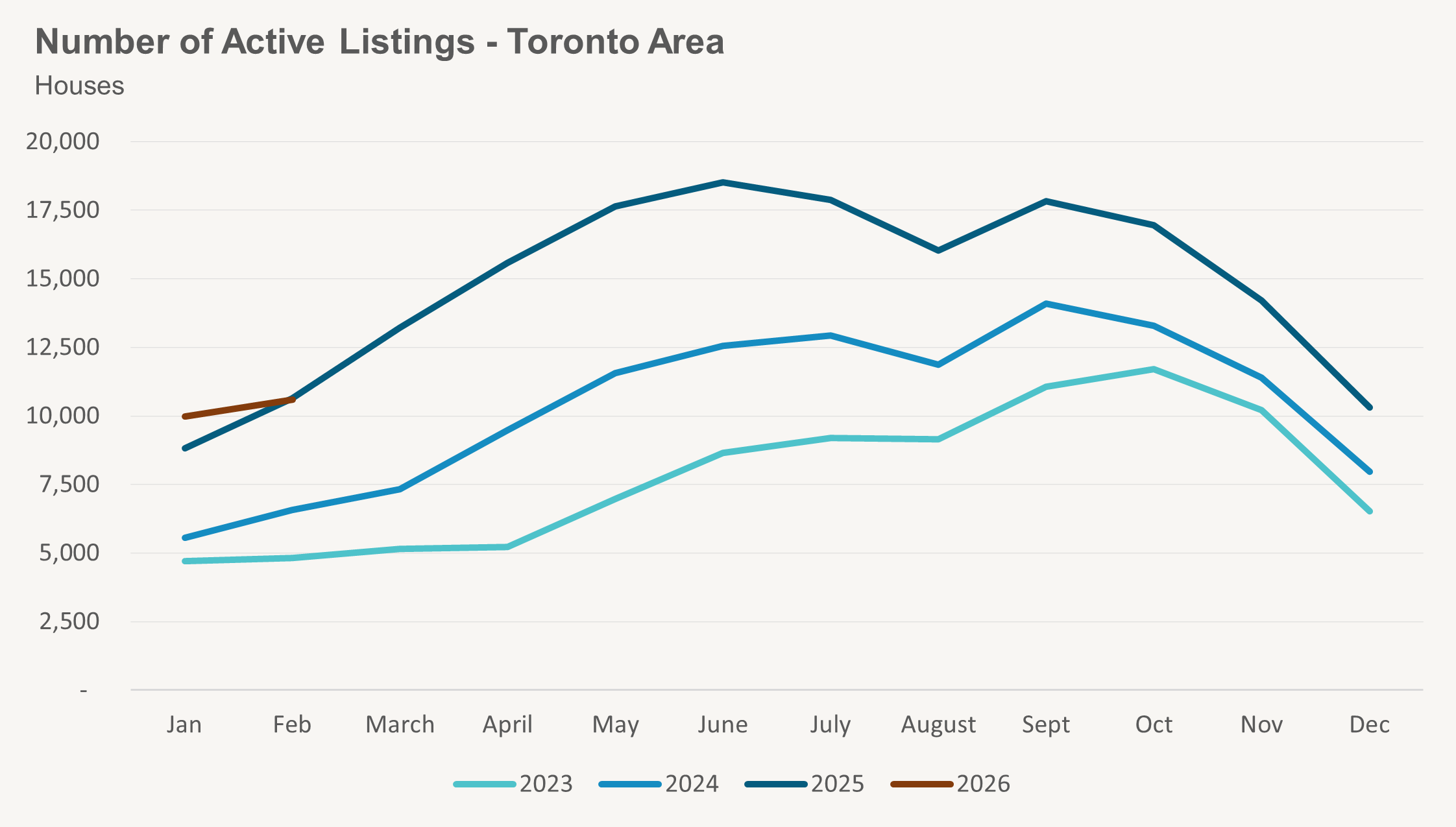
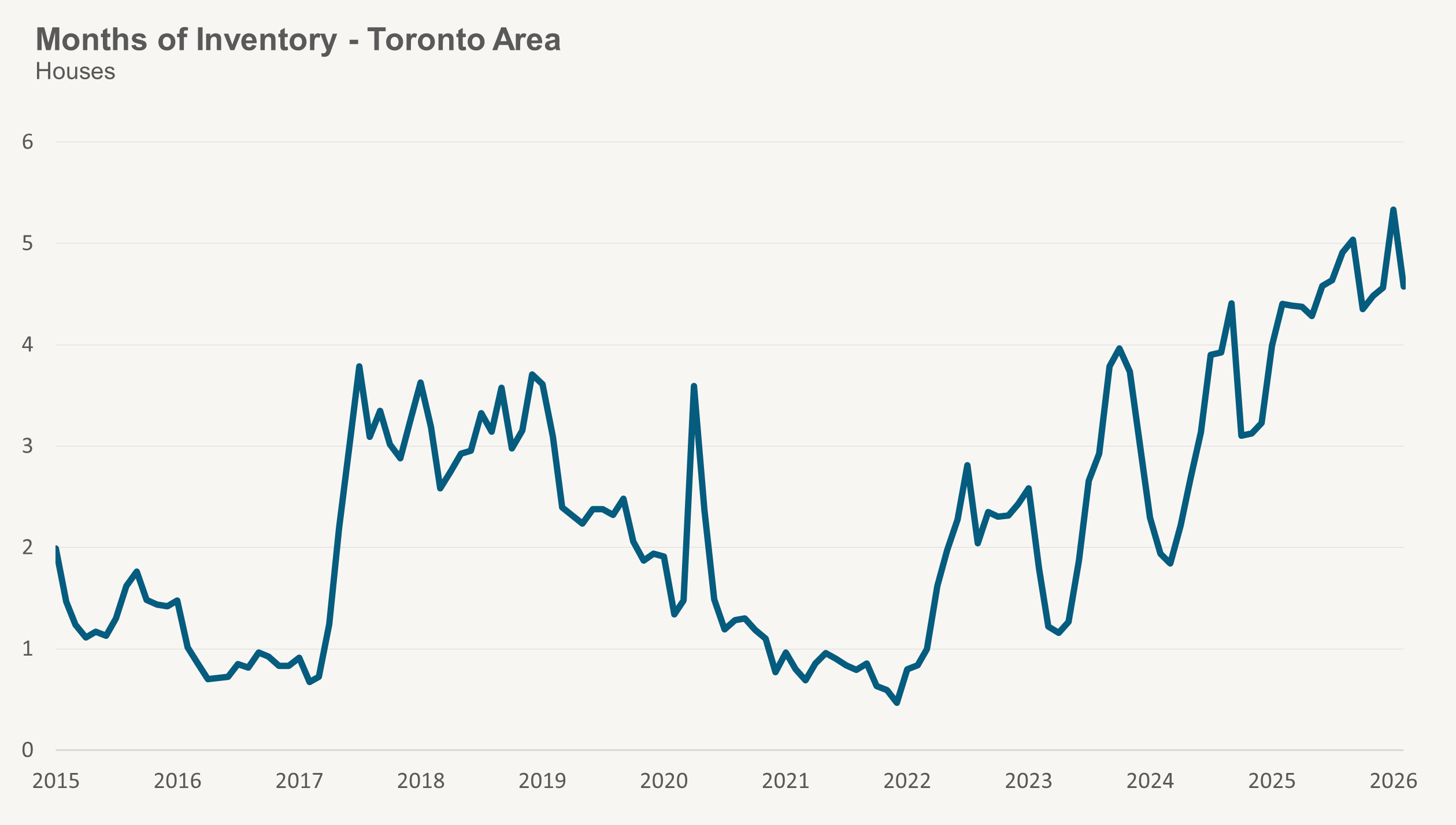
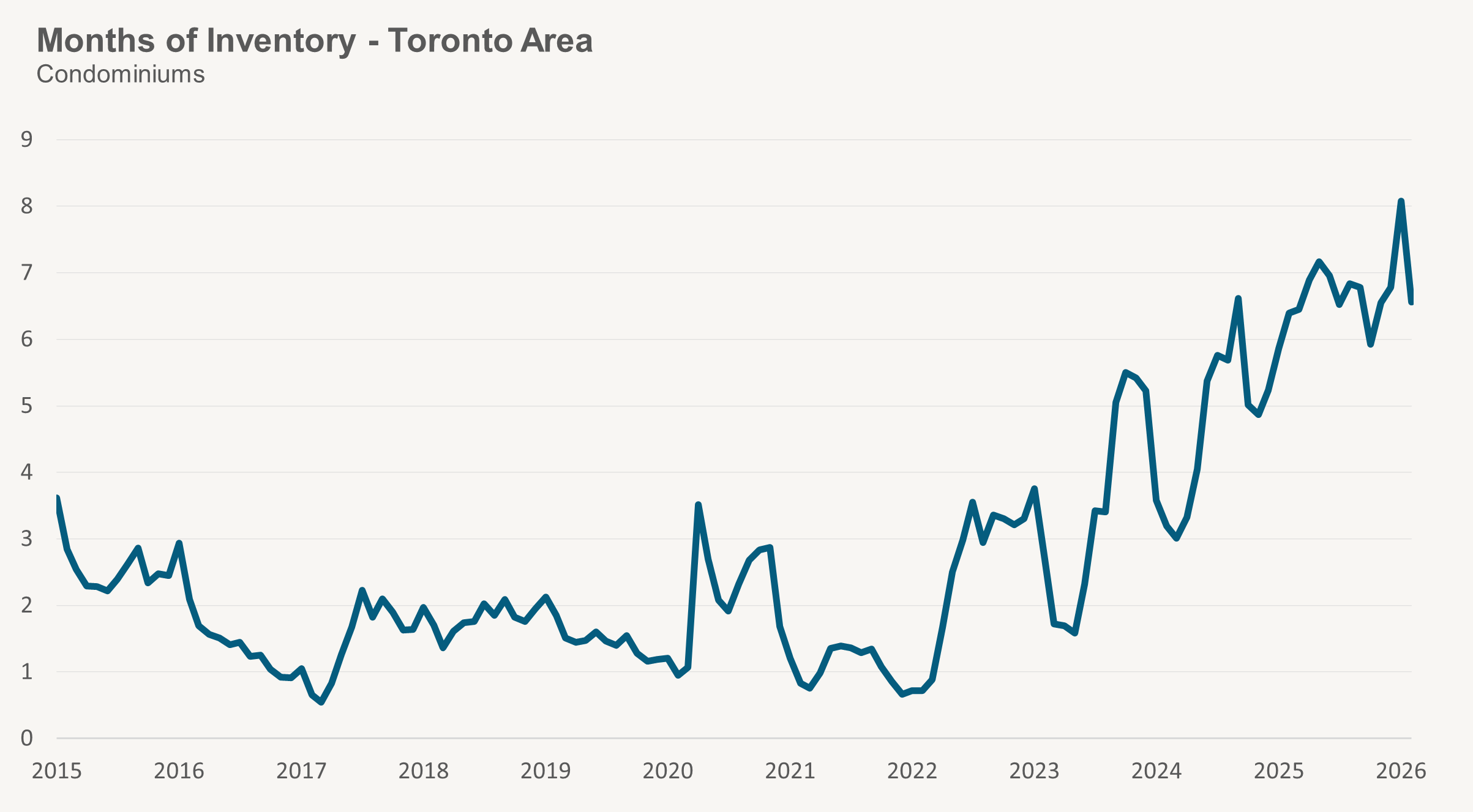
The Months of Inventory ratio (MOI) looks at the number of homes available for sale in a given month divided by the number of homes sold in that month. It answers the following question: If no more homes came on the market for sale, how long would it take for all the existing homes on the market to sell, given the current level of demand? The higher the MOI, the cooler the market is. A balanced market (a market where prices are neither rising nor falling) is one where MOI is between four to six months. The lower the MOI, the more rapidly we would expect prices to rise.
While the current level of MOI gives us clues into how competitive the market is on-the-ground today, the direction it is moving in also gives us some clues into where the market January is heading.
The MOI for houses fell to 4.6 in January.
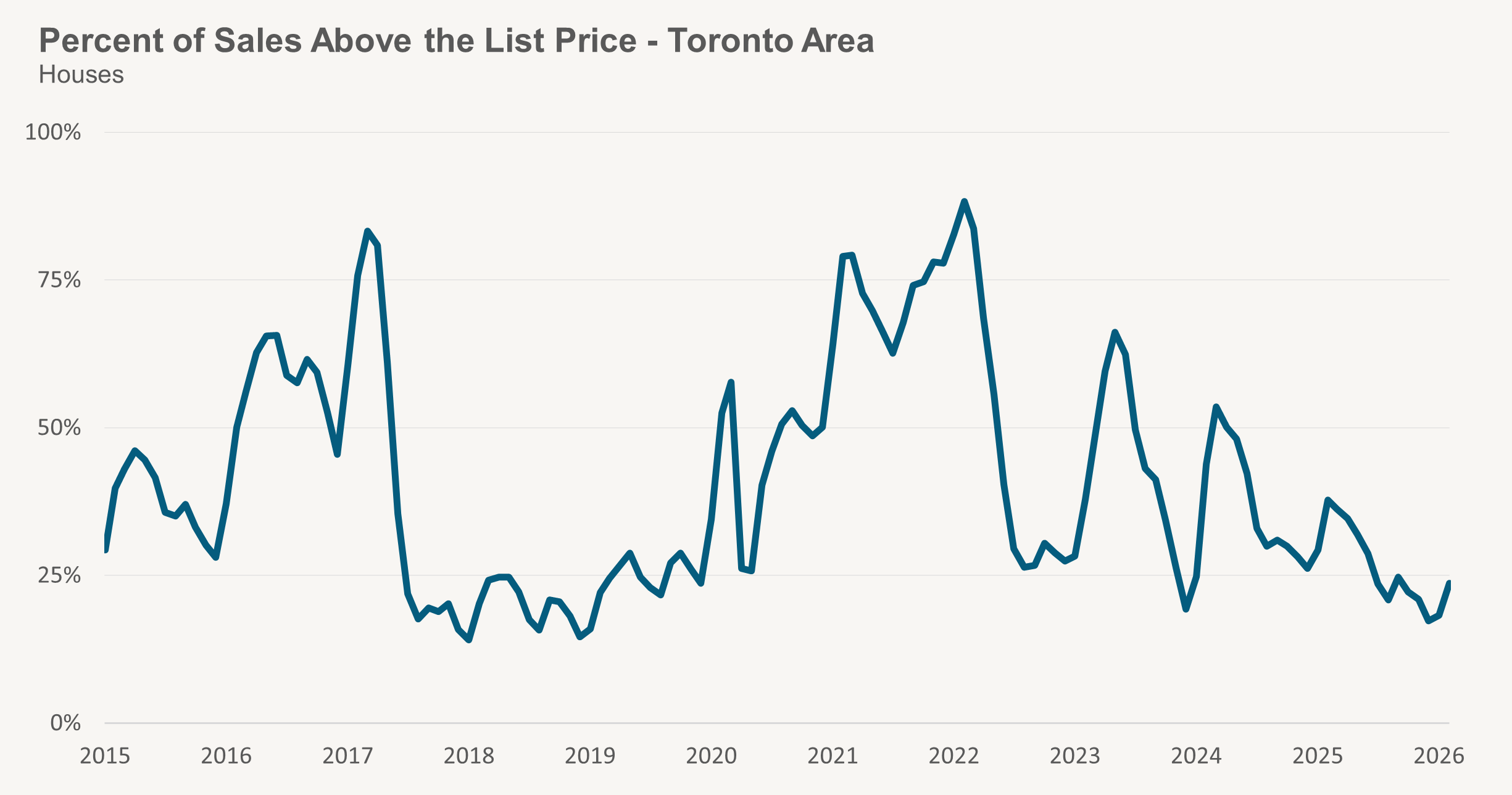
The share of houses selling for more than the owner’s list price increased to 24% in January.
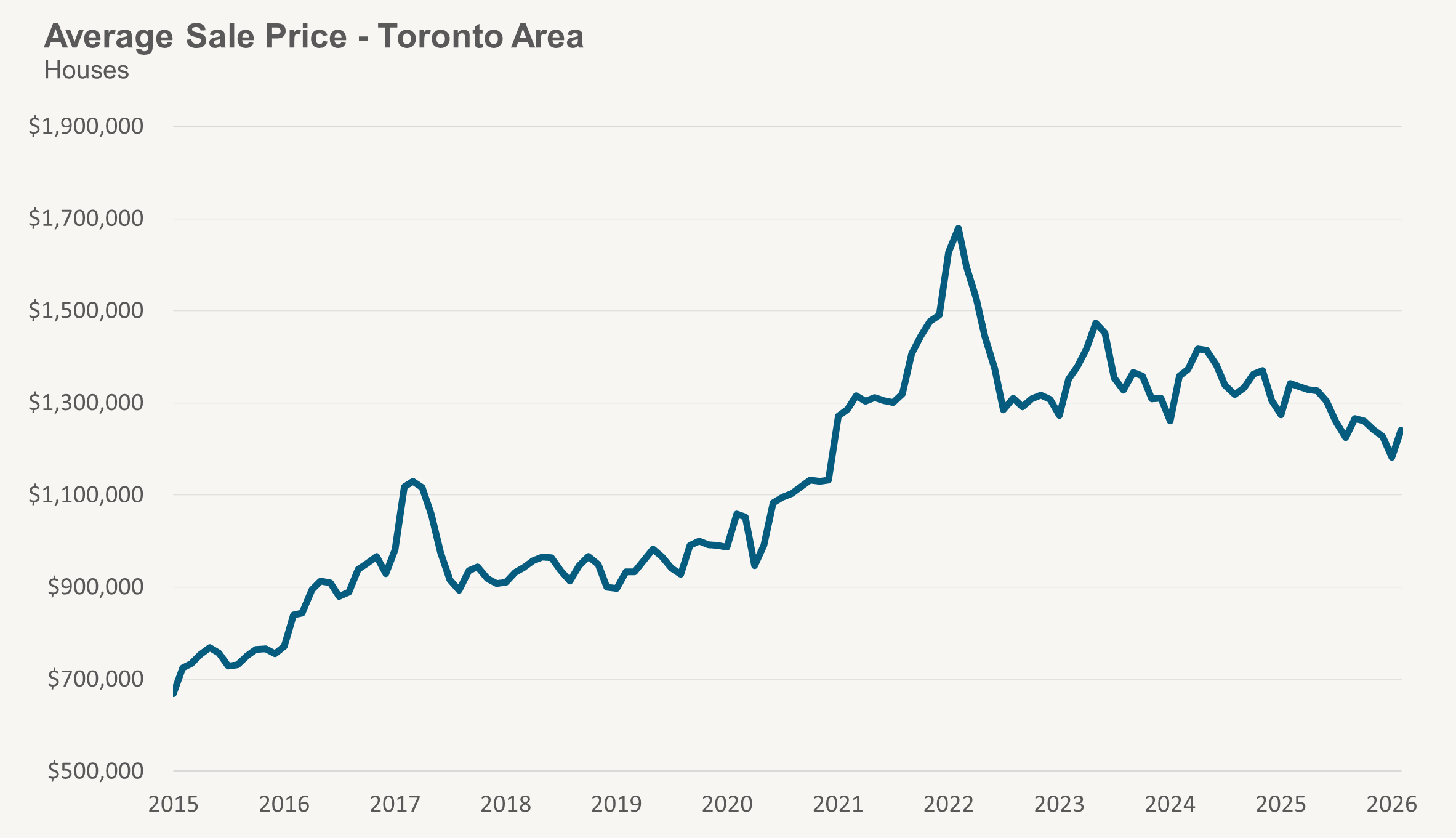
The average price for a house in January 2025, $1,241,047, was down 8% from the same month last year.
The median house price in January was $1,065,000, down 8% over last year.
The median is calculated by ordering all the sale prices in a given month and then selecting the price at the midpoint of that list such that half of all home sales are above that price and half are below that price. Economists often prefer the median price over the average because it is less sensitive to big increases in the sale of high-end or low-end homes in a given month, which can skew the average price.
Condo Statistics
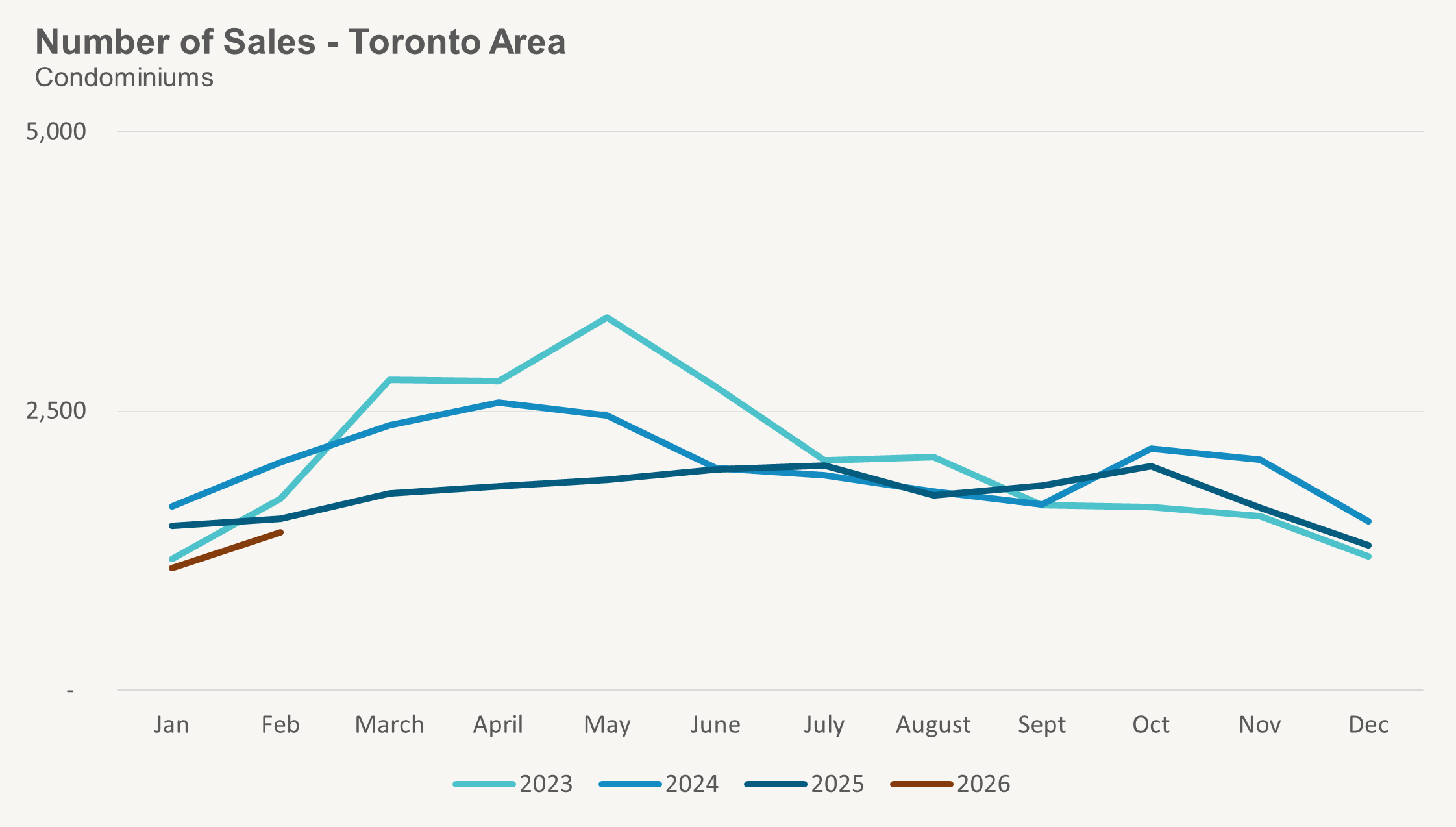
Condo (condominiums, including condo apartments, condo townhouses, etc.) sales in the Toronto area in January 2025 were down 8% compared to the same month last year.
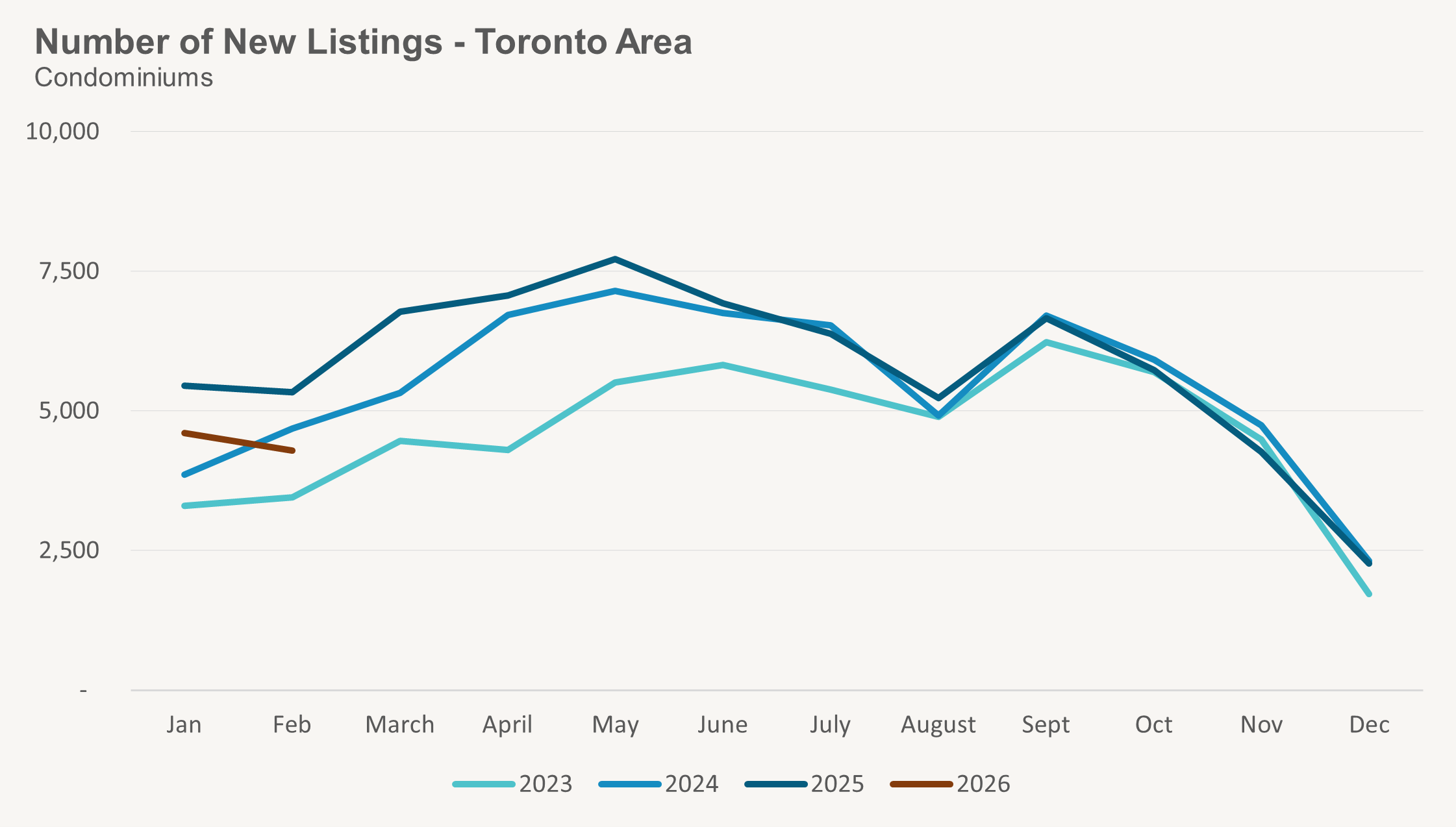
New condo listings were down 20% in January over last year.
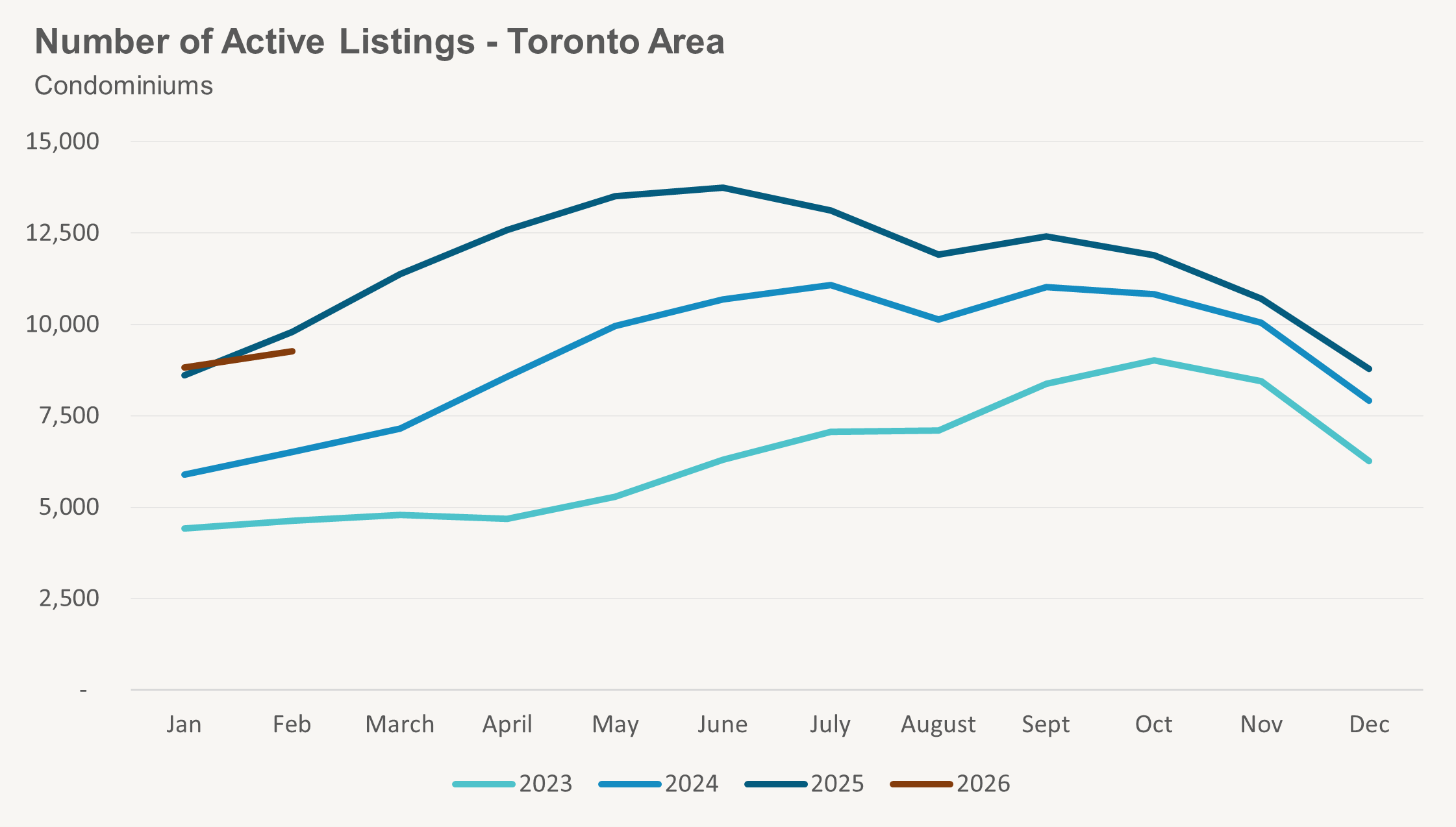
The number of condos available for sale at the end of the month, or active listings, was down 6% over last year.
Condo months of inventory increased to 6.6 MOI in January.
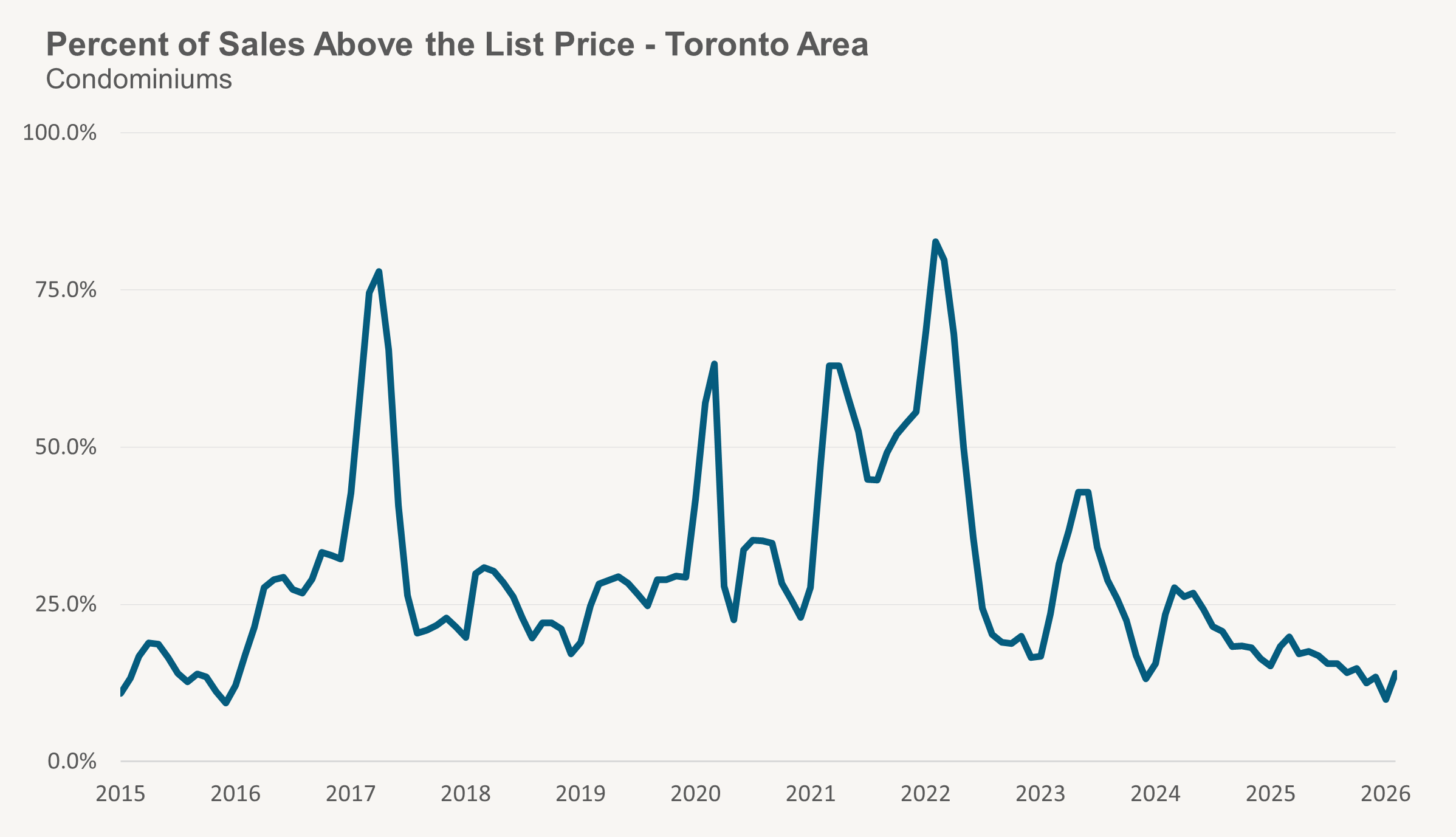
The share of condos selling for over the asking price increased to 14% in January.
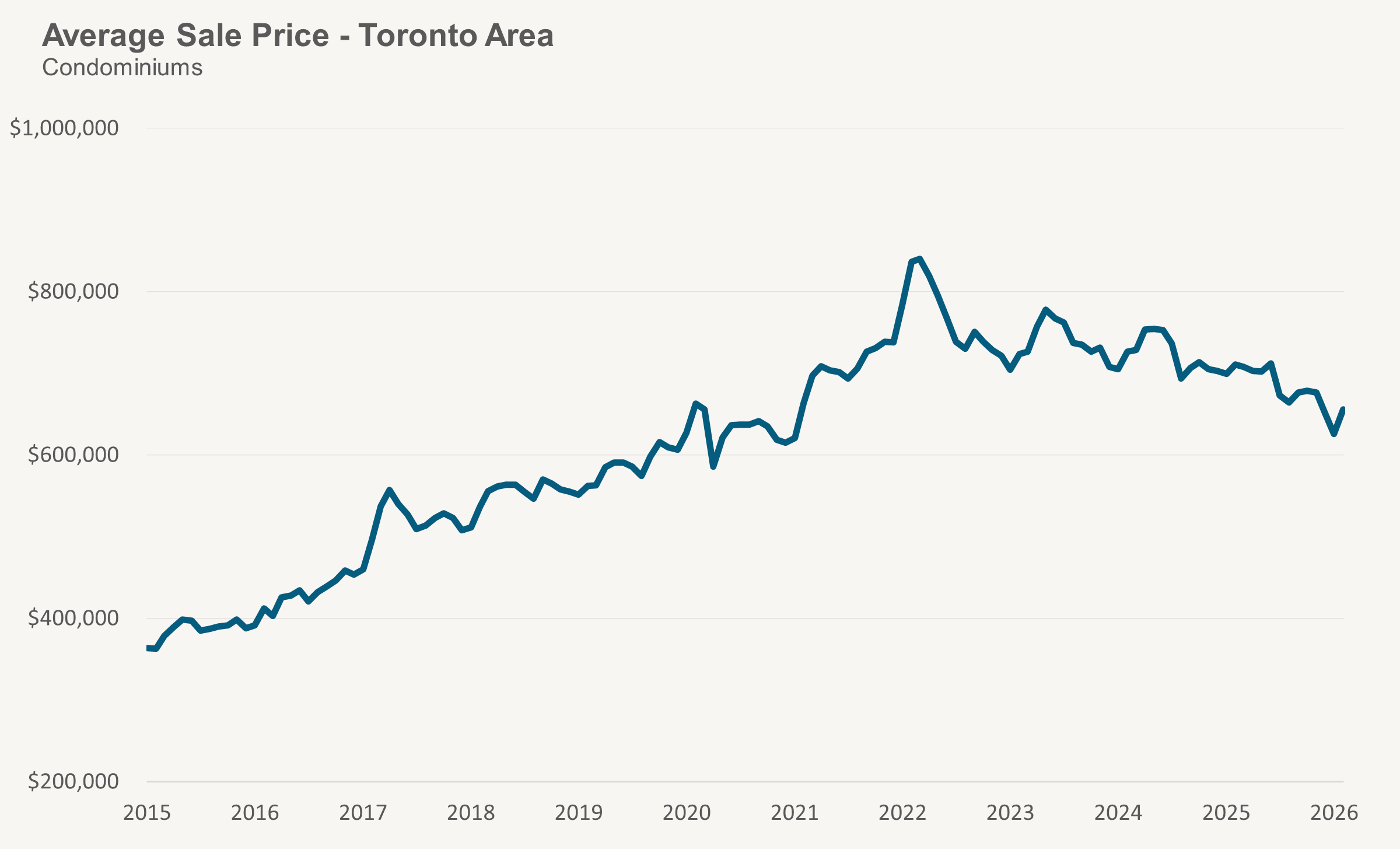
The average price of a condo in January was $655,664, down 8% from last year. The median price was $588,800, down 7% from last year.
John Pasalis is President of Realosophy Realty. A specialist in real estate data analysis, John’s research focuses on unlocking micro trends in the Greater Toronto Area real estate market. His research has been utilized by the Bank of Canada, the Canadian Mortgage and Housing Corporation (CMHC) and the International Monetary Fund (IMF).
Have questions about your own moves in the Toronto area as a buyer, seller, investor or renter? Book a no-obligation consult with John and his team at a Realosophy here: https://www.movesmartly.com/meetjohn
Published: March 04, 2026