« April 2008 | Main | June 2008 »

May 2008

May 30, 2008

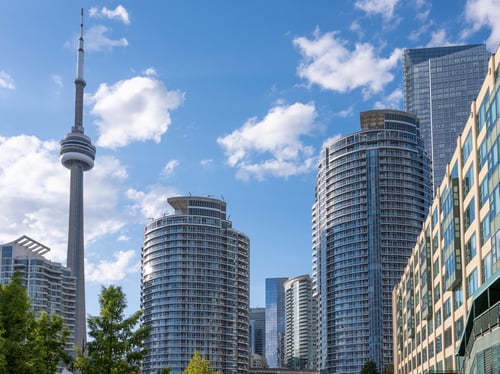
Toronto Condo Investors Not Buying Like They Used To

John Pasalis in Toronto Real Estate News

Torontocondos The Globe and Mail reports that the Toronto condo market is cooling off as fewer investors are buying pre-construction condominiums.  From the article:

Brad Lamb, one of the city's most prominent real estate agents, has noticed the pinch. "Of what we expected to sell in a month," he said, "we are now selling half. ... We've come down to earth."

The change appears to be the result of investors, looking to rent or quickly sell multiple condo units, beginning to balk at rising prices and reports of a weakening economy.

Although there are no definitive statistics on the number of investors in the market, Jane Renwick, executive vice-president of Urbanation, estimates they snapped up as much as 60 per cent of units in some large, downtown developments last year. "We're expecting investor activity to slow," she said.

At Mr. Lamb's firm, meanwhile, "investors would now take a quarter" of the units in a typical project, down from half in 2007, he said.

It's interesting to hear prominent condo broker and developer Brad Lamb say that sales to investors are roughly half of what they were last year.  It is also interesting to read that Brad Lamb and Jane Renwick both believe that investors accounted for  50%-60% of total condo sales last year.  In their recent forecast of Toronto's condo market, CMHC assumed that only 30% of condo sales were bought by investors (See CMHC Analyst Weighs in on Toronto's Condo Market).  Investor participation is an important variable when forecasting the condo market so any major discrepancy in this number will significantly impact the accuracy of CMHC's forecast.

John Pasalis is a sales associate at Prudential Properties Plus in Toronto and a founder of Realosophy. Email John

Subscribe to the Move Smartly blog by email 

Related Posts:

No Crash Expected for Toronto's Condo Market: CMHC

CMHC Analyst Weighs in on Toronto's Condo Market

Media Roundup - May 30th

Media Roundup

Early May Sales Fall, but Prices Up (Globe and Mail)

Restaurant, condos could finance Toronto Museum at foot of Bathurst, city says (National Post)

Toronto's Art Gallery of Ontario to Reopen Nov. 14 (CBC)

Priced Out of Paradise (Globe and Mail)

U.S. Mishaps Leave CIBC with $1.1B Loss (CBC)

RBC Profit Falls 27 Per Cent Amid U.S. Market Woes (CBC)

Foreign Buyers Flock to U.S. Housing Market (Wall Street Journal)

U.S. Housing: Plenty of 'For Sale' Signs but Actual Sales Lagging (Globe and Mail)

May 29, 2008

The Growing Popularity of Eco-renovations

Jesse Fleming in Urban Issues

Renovation season gets underway each year as soon as spring’s tulips begin to peek out of gardens across the city.  In a previous post, I had suggested that if eco-minded homeowners are not quite ready for a complete overhaul, smaller scale changes should be implemented slowly to ensure their effectiveness, after all the tortoise did win the race. 

Observing this spring’s rebuild season has lead me to believe that not only are more homes receiving environmental improvements, but that homeowners are more frequently jumping in with both feet.  During my explorations of Toronto’s neighbourhoods, I have noticed an increase in lawn signage denoting eco-renovation projects that are underway.  Some are complete demolition-and-start-from-scratch ventures while others maintain their roof and walls and are simply gutted.

Continue reading "The Growing Popularity of Eco-renovations" »

Pre-piping Your Home for Natural Gas

Rachel Loizos in Home Buying

Home buyers who are buying a newly constructed home have a great opportunity to customize many aspects of the new house and make decisions from the ground up.  One practical thing to consider is to request that the builder pre-pipe the house for natural gas.  Even if the appliances that you will be bringing in to the new house are not natural gas appliances, you will have left yourself with the option to consider a natural gas appliance as a replacement should that need arise.  Think about where you would like the hook up locations to be in and around the house - the laundry room, the basement, the kitchen, the living room (for a fireplace) and possibly in the rear of the house for a barbeque are some considerations.

The up front cost associated with adding the piping will be lower than if you were to wait until the house is complete – this is because in addition to the cost of the installation, which is billed per hook-up location, there will be the costs associated with repairing or replacing the walls that will be damaged during the process.  Consult with your builder and review your contract to ensure that it reflects your understanding of what you want.

During the process of selecting finishings and features make sure that you consider the future value that pre-piping your new home can bring – that value may offset the initial cost.   

Rachel Loizos is an associate lawyer at Sotos LLP in Toronto. She practices in the area of real estate law.
Email Rachel

Subscribe to Move Smartly by Email


May 28, 2008

New Delayed Closing and Occupancy Warranty: What You Need to Know

Carl Minicucci in Home Buying Tips, Condo Buying Tips, Legal

In the market and planning the purchase of a new freehold home or condominium in the next few months?  If so, you will find the upcoming two-part blog posts of particular interest.  I will highlight and discuss the expected pending changes to delayed closing and occupancy provisions of the Ontario New Home Warranties Plan Act. 

Overview

In March of this year, Tarion Warranty Corporation (the Government approved private corporation responsible for administering the Ontario New Home Warranties Plan Act), announced a change effective July 1, 2008, to Ontario purchasers of new freehold homes or condominiums.

These changes to the Ontario New Home Warranties Plan Act and Regulations have stemmed from growing concerns and frustrations from the public and media over the lack of clarity and transparent disclosure facing Home Buyers.

Continue reading "New Delayed Closing and Occupancy Warranty: What You Need to Know" »

May 27, 2008

World's First Billion Dollar Home to Rise in Mumbai

John Pasalis in Real Estate Trends

Antilla1_2 I just came across a Forbes article covering the world's first billion dollar home.  The home is being built for Indian billionaire and fifth richest man in the world, Mukesh Ambani.  The house, called Antilla, will be a 550 ft high 27 storey building in the heart of Mumbai.  With construction costs of close to $2B, the Antilla will be the most expensive house in the world. 

From the Forbes article:

The Ambani home, called Antilla, differs in that no two floors are alike in either plans or materials used. At the request of Nita Ambani, say the designers, if a metal, wood or crystal is part of the ninth-floor design, it shouldn't be used on the eleventh floor, for example. The idea is to blend styles and architectural elements so spaces give the feel of consistency, but without repetition.

Antilla's shape is based on Vaastu, an Indian tradition much like Feng Shui that is said to move energy beneficially through the building by strategically placing materials, rooms and objects.

On the health level, local plants decorate the outdoor patio near the swimming pool and yoga studio. The floor also features an ice room where residents and guests can escape the Mumbai heat to a small, cooled chamber dusted by man-made snow flurries.

For more temperate days, the family will enjoy a four-story open garden. In profile, the rebar-enforced beams form a "W" shape that supports the upper two-thirds of the building while creating an open-air atrium of gardens, flowers and lawns. Gardens, whether hanging hydroponic plants, or fixed trees, are a critical part of the building's exterior adornment but also serve a purpose: The plants act as an energy-saving device by absorbing sunlight, thus deflecting it from the living spaces and making it easier to keep the interior cool in summer and warm in winter. An internal core space on the garden level contains entertaining rooms and balconies that clear the tree line and offer views of downtown Mumbai.

A few more facts about the house:

Continue reading "World's First Billion Dollar Home to Rise in Mumbai" »

May 26, 2008

Before Home Buying Check Survey for Boundaries

Bob Aaron in Home Buying, Legal

Taking the law into your own hands over a property line dispute can be dangerous to your bank account, as one Toronto homeowner discovered recently.

Sharon and Marino Zorz and Katherina Attard are neighbours on Baby Point Rd., near Jane and Annette Sts.

The two houses were built about 80 years ago, and the old fence separating them was not constructed on the property line, but 15 inches west of the actual boundary.

The original deed to the Zorz house included a right-of-way over that adjoining (or easterly) 15-inch strip of the Attard property. For about 80 years, the fence between the houses enclosed the strip of land making it appear that the Zorz land was 15 inches wider than what was shown on the paper title.

In 2001, the properties were converted by the government into the Land Titles system, which effectively froze any rights to adverse possession or squatter's rights as they existed on the date of conversion, but it did not end those rights.

In the fall of 2006, Attard renovated her home and constructed an addition. During this process she removed the old fence and replaced it with a new one on the property line – east of where it had been for the previous 80 years.

As a result, the Zorz family could no longer access their garage, and sued Attard in November, 2006. Later that month they obtained a judge's order requiring Attard to remove the fence. Sometime afterward, the fence was removed and then reconstructed. In March, another court order required the second new fence to be removed until the case was heard.


Continue reading "Before Home Buying Check Survey for Boundaries" »

May 23, 2008

Media Roundup - May 23rd

House sales continue slide (Toronto Star)

Big drop in mortgage rates (CBC)

Mortgage rates on the decline (Globe and Mail)

17 new condominium projects already launched in Q2/08 (Canada Newswire)

Stinson plans Canada's tallest apartment building (Financial Post)

Honey, I'm planning to renovate the house (Globe and Mail)

Carney cautions against complacency (Globe and Mail)

Canadian retail sales weaker than expected (Toronto Star)

Vision collision at the OMB (Toronto Star)

Has 'future city' dream vanished? (Toronto Star)

Shortfall on bike lanes (Toronto Star)

Cyclists need a bicycle built for T.O. (Toronto Star)

O Canada, Where Have Your Bargains Gone? - A Day in Toronto (New York Times)

Doors Open 2008 - Toronto's Scared Places Featured (Toronto Star)

May 22, 2008

CMHC Analyst Weighs in on Toronto's Condo Market

John Pasalis in Toronto Real Estate News, Condo Buying Tips

Chmclogo Last week I raised a couple of concerns about a recent Canada Mortgage and Housing Corporation (CMHC) report that had a positive forecast for Toronto's condominium market (see No Crash Expected for Toronto's Condo Market: CMHC).  I invited CMHC's Senior GTA Market Analyst Jason Mercer to answer a few questions about this report and the overall outlook for Toronto's condo market. 

John Pasalis:  Hi Jason, Thank you for taking the time to do this interview. I wanted to focus today’s interview on CMHC’s recent forecast for Toronto’s condo market. My first question has to do with your forecast for continued price appreciation in the condo market through to 2009. The report appears to anticipate two negative factors working against the condo market: 1) an increase in supply from investors selling their units on completion and 2) a decrease in demand from first time buyers. How are these two negative factors going to impact condos in lower to mid price ranges? Does CMHC anticipate price appreciation in this segment of the condo market?

Jason Mercer, CMHC:  Both of the factors you mention will result in increased choice in the existing home market for condominium apartments over the next two years.  It is important to take a step back and think about what we experienced in 2007 to better explain what is forecast for 2008 and 2009.
In 2007, we experienced a resurgence in first-time buying activity in the GTA.  This demand was based on strong job growth for young people coupled with the continuation of low borrowing costs and a diversity of mortgage products available to borrowers.   Many first time buyers chose the condominium apartment market as their entry point into home ownership.  As a result sales increased strongly in the existing home market.  At the same time as sales were increasing in the resale market, completions of new condominium apartments had trended lower.  This meant that there were fewer units that could potentially convert into new listings (listings from investors or from those whose housing needs had simply changed between pre-construction purchase and completion).  Thus, with sales up and listings flat to lower, there was more competition for condominium apartments.  We experienced average annual price increases in the central Toronto area of over ten per cent.  In some cases we were experiencing multiple offer situations for some condominium apartments.

The situation will change somewhat in 2008 and 2009.  With completions trending higher, we will see more listings in the market place.  With more choice, offers will not be as aggressive, so price growth is expected to moderate to approximately five per cent in 2008 and 2.5 per cent in 2009.
At CMHC, we do not break down our condominium apartment price forecast down by sub-segment. 

Continue reading "CMHC Analyst Weighs in on Toronto's Condo Market" »

May 21, 2008

Little Italy

Jesse Fleming in Toronto Neighbourhoods

Growing up in the suburbs, I had been a frequent patron of the night life on College Street otherwise known as Little Italy.  I always described the area as if its entirety was lined up similar to the storefronts along College and the light post decorations shaped like the boot of Italy.  It was only after I had moved to Toronto (and lost my suburban blinders) that I realized that there was an entire neighbourhood stemming from College south to Dundas Street West and bounded by Ossington Avenue and Bathurst Street that made up Little Italy (check out Realosophy’s Little Italy neighbourhood profile including local school and housing stats). Little_italy_sign

Situated directly north of Trinity Bellwoods, Little Italy contains similar housing styles and it is easy to find yourself crossing Dundas West from one to the next (as I did) without realizing it.  Semi-detached and two-storied are the popular styles among the otherwise eclectic mix of abode.  Generally, I found a pattern of similarities between homes that sit on the same street and differing from street to street.  Multi-unit residences are more prominent here than in Trinity Bellwoods although I am not sure if it is due to greater numbers in Little Italy or higher visibility.  Along the outer streets, apartments above retail stores are a common sighting as are fire escapes which I have hopelessly romanticized a la Pretty Woman

Continue reading "Little Italy" »

Profile

Realosophy

  • Realosophy Vertical Banner