



GTA Housing Market Update – November 2025
A very different ending than last year.
I’ve been thinking a lot about how differently this year is ending compared to 2024. This time last year the mood in the housing market was surprisingly upbeat. Buyers were rushing back into the market trying to get ahead of what they expected would be a busy and competitive spring.
Sellers were equally confident, holding firm on price and assuming that patience would pay off.
But everything changed on February 1st when Trump announced plans to introduce 25 percent tariffs on Canada. Sentiment shifted almost overnight. Optimism turned into anxiety about the economy and what these tariffs would mean for jobs, trade and housing.
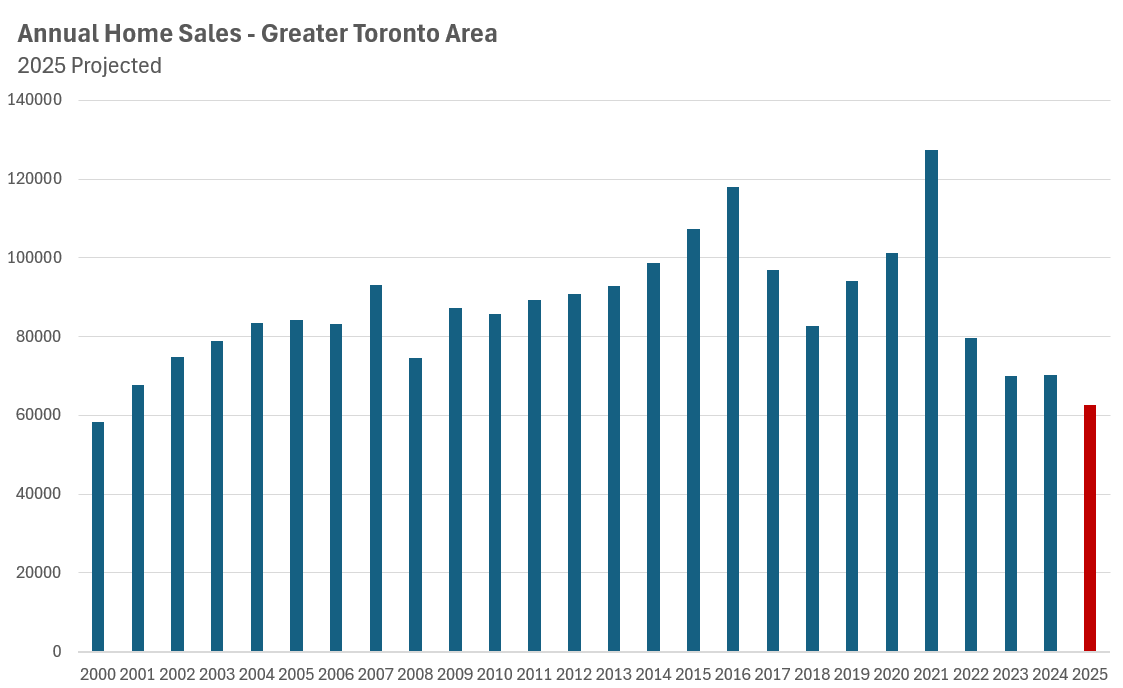
You can see this shift clearly in the data. Sales started slowing at the start of the year and never recovered. When 2025 wraps up we will likely end the year with roughly 62,500 home sales across the GTA. That is about 10 percent below last year and the lowest level of transactions we have seen in 25 years.
As sales fell, inventory climbed rapidly. More homes were sitting on the market with fewer buyers to absorb them and by the summer that imbalance started to put real pressure on prices. The average price of a low-rise house is now down 9 percent year-over-year and sellers who were stubborn early in the year are adjusting to reality. Many are now pricing more aggressively because they plan to buy after selling and they see the opportunity in a cooler market.
Both the low-rise and condo segments are now in buyer’s-market territory and unless there is a major shift in economic conditions, I expect that to carry into the start of 2026.
November at a Glance
Houses
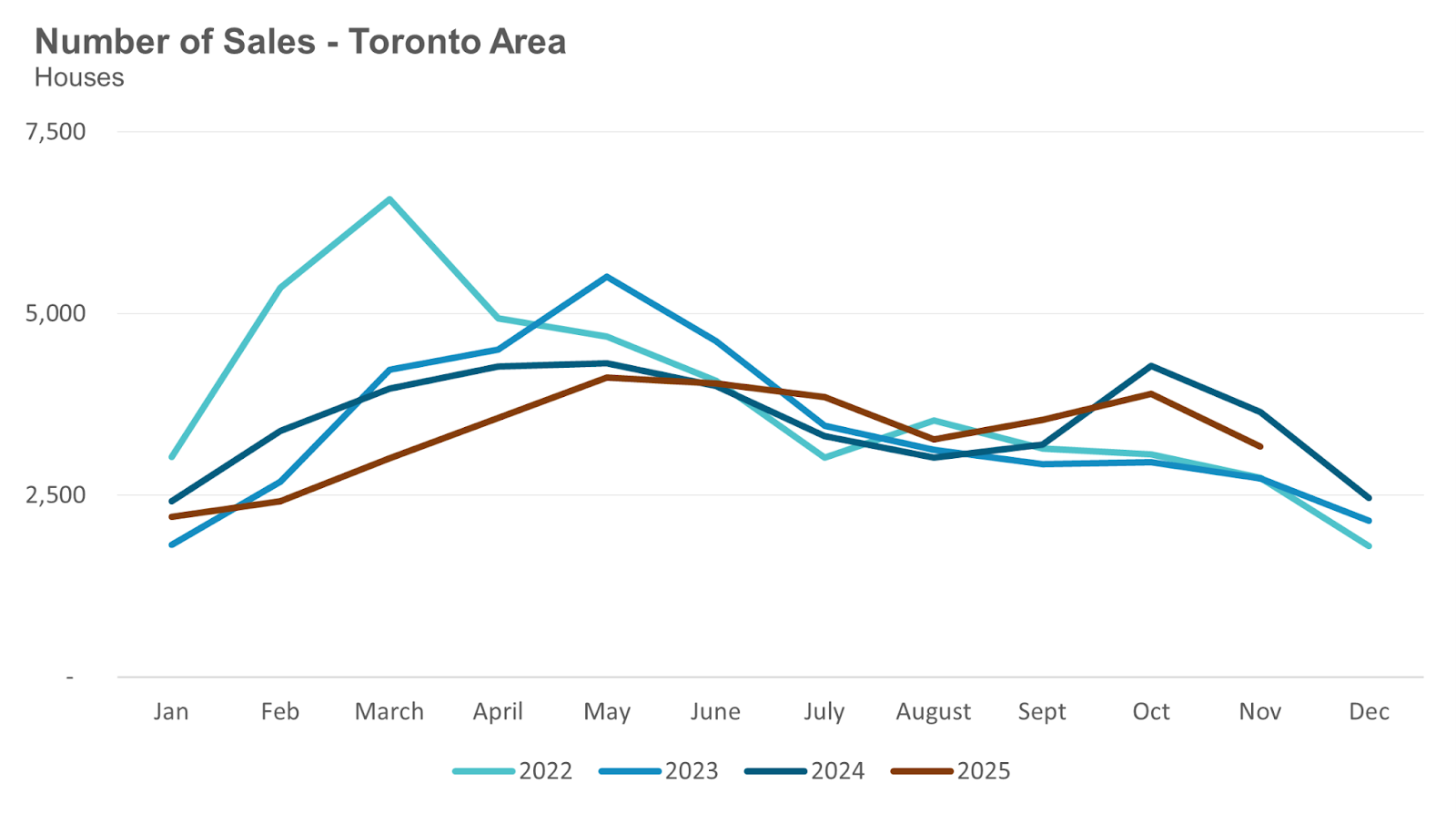
Sales were down 13 percent over last year.
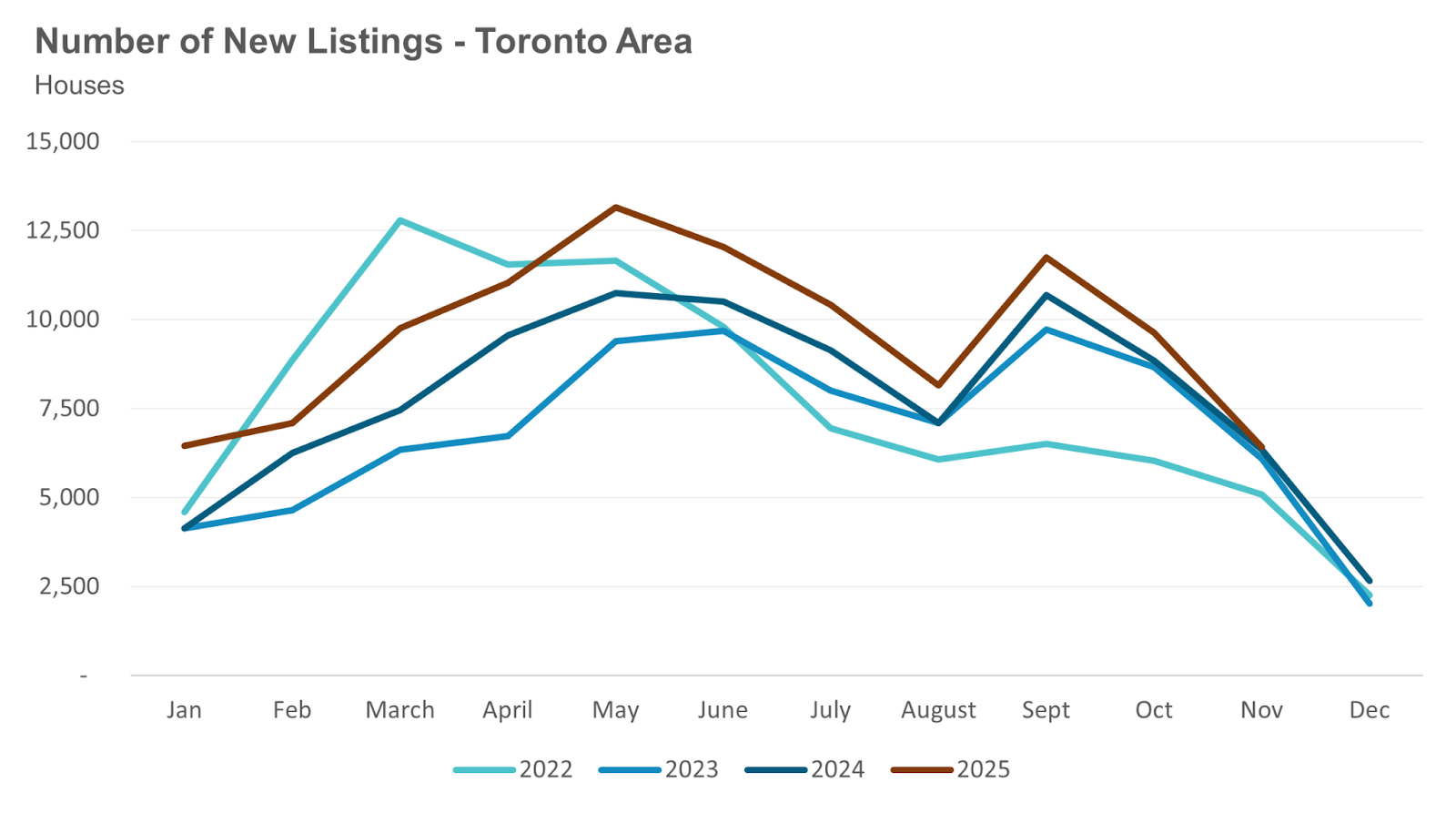
New listings were up 1 percent.
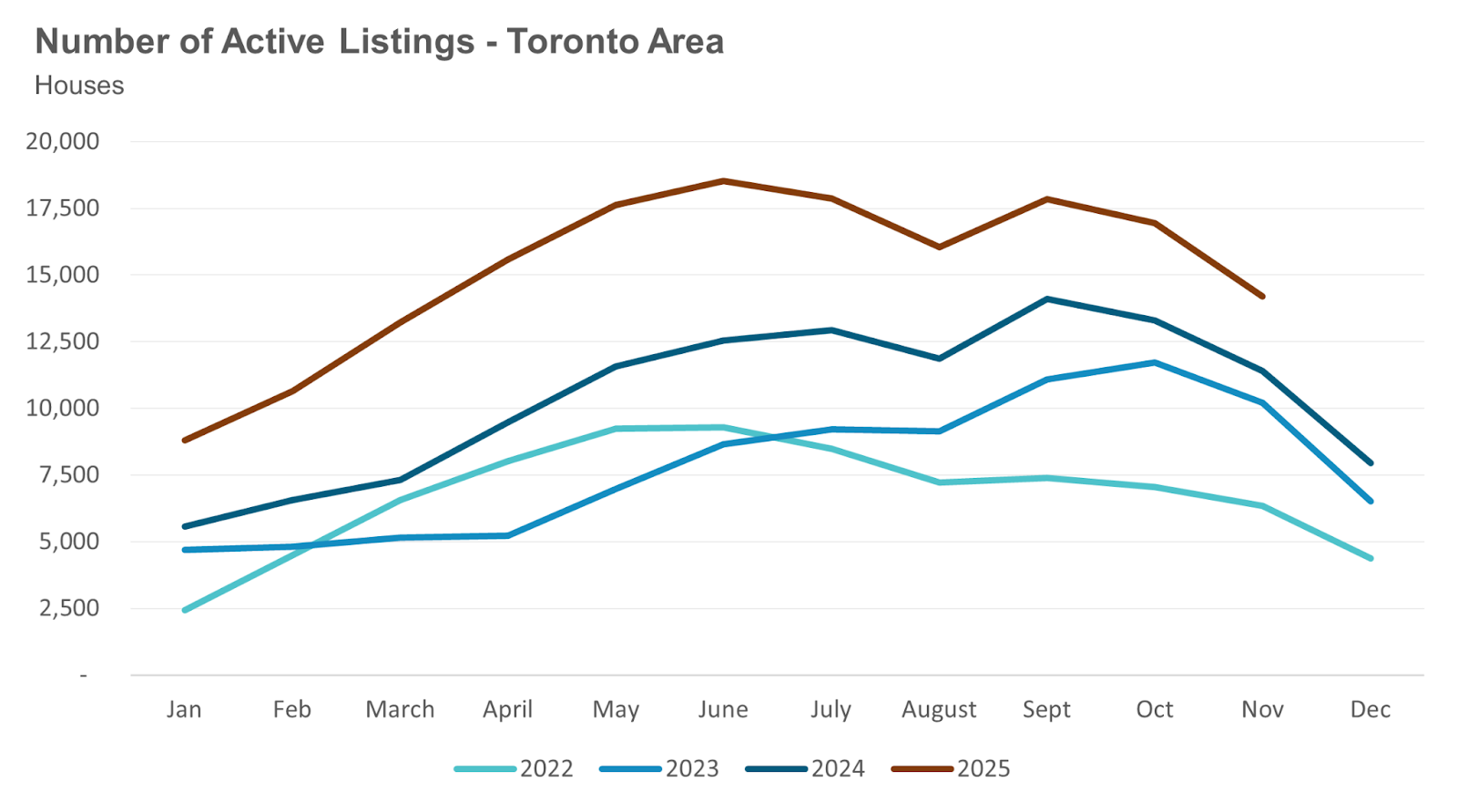
Active listings were up 25 percent.
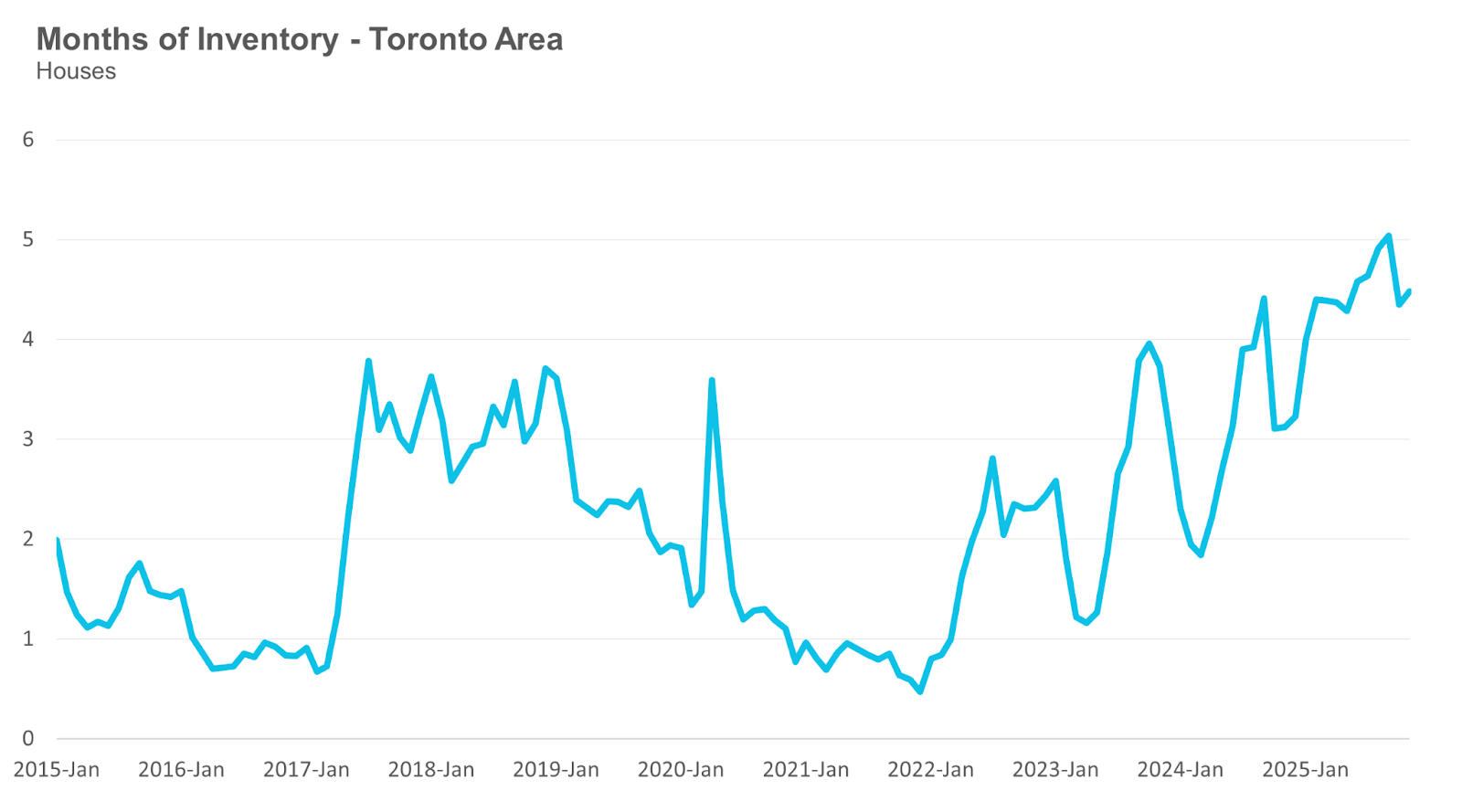
Months of Inventory increased to 4.5.
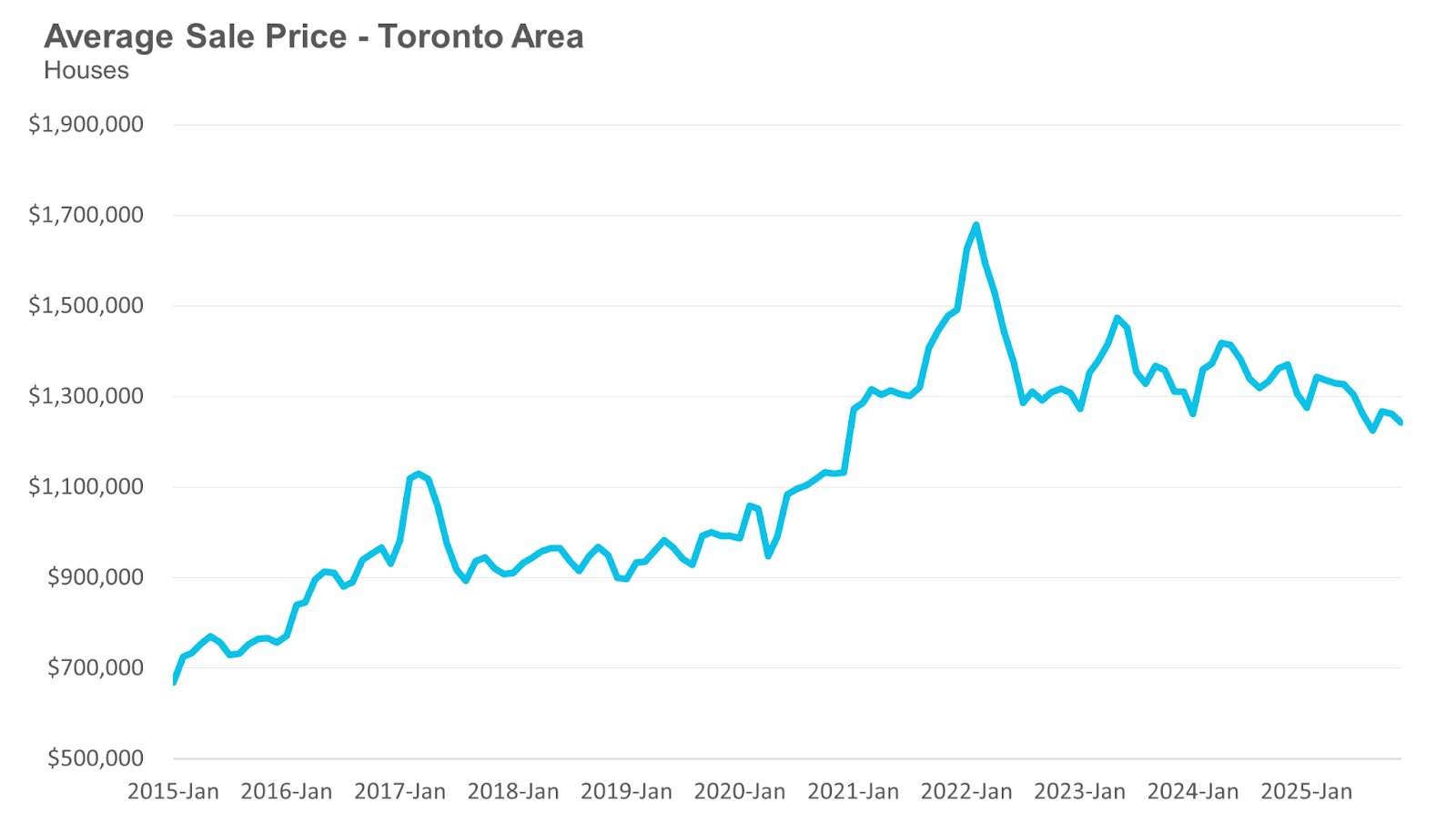
Average price: $1,241,583, down 9 percent.
Median price: $1,050,000, down 10 percent.
Condos
Sales were down 21 percent over last year.
New listings were down 10 percent.
Active listings were up 7 percent.
Months of Inventory increased to 6.5.
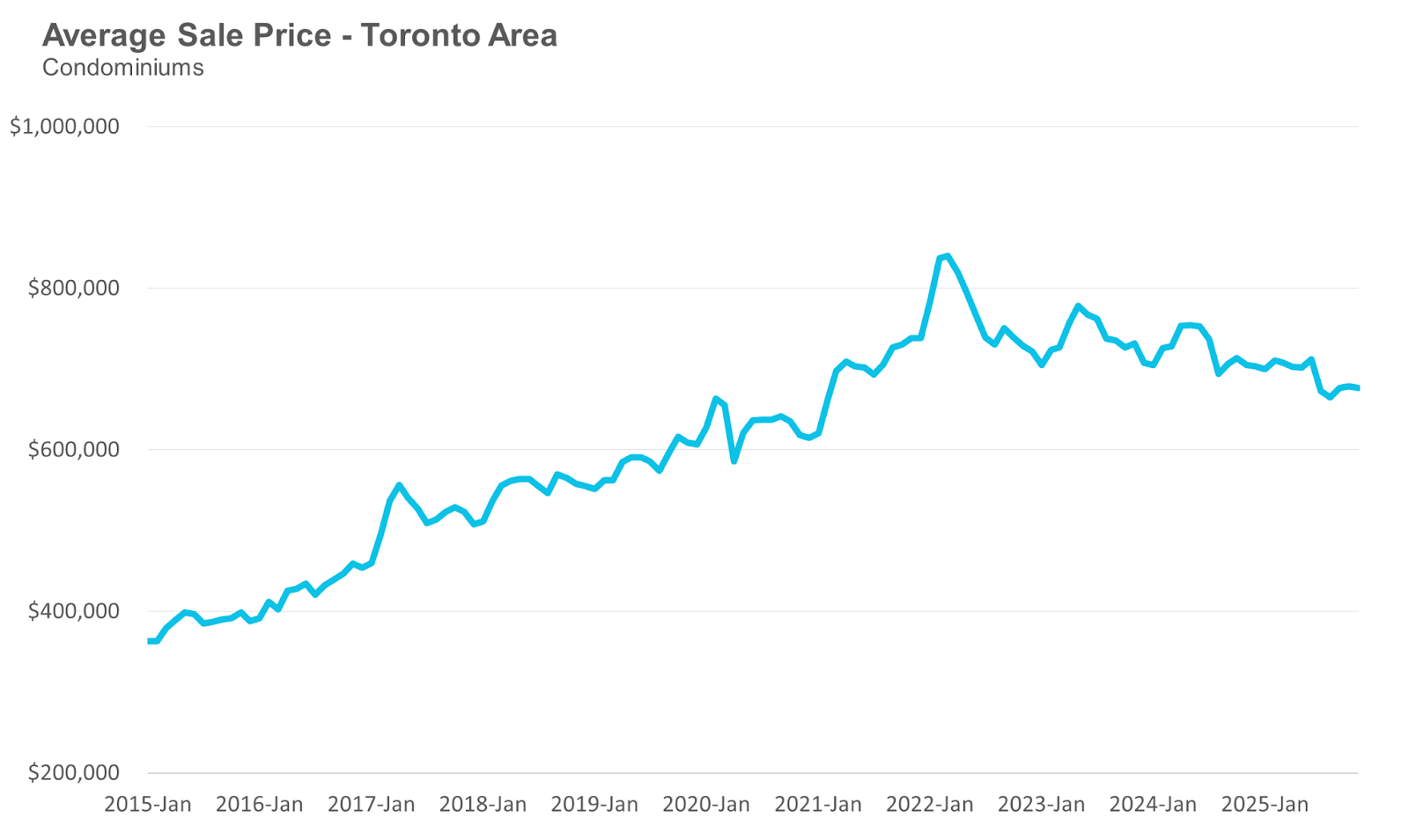
Average price: $676,494, down 4 percent.
Median price: $589,500, down 8 percent.
What’s next:
The biggest story heading into 2026 is whether demand can stabilize or whether economic uncertainty continues to pull buyers back to the sidelines. Inventory is still building and unless we see a meaningful reversal in the broader economy, price pressure is likely to continue.
Monthly Statistics
House Statistics
House sales (low-rise freehold detached, semi-detached, townhouse, etc.) in the Greater Toronto Area (GTA) in November 2025 were down 13% compared to the same month last year.
New house listings in November were up 1% compared to last year.
The number of houses available for sale (“active listings”) was up 25% in November compared to the same month last year.
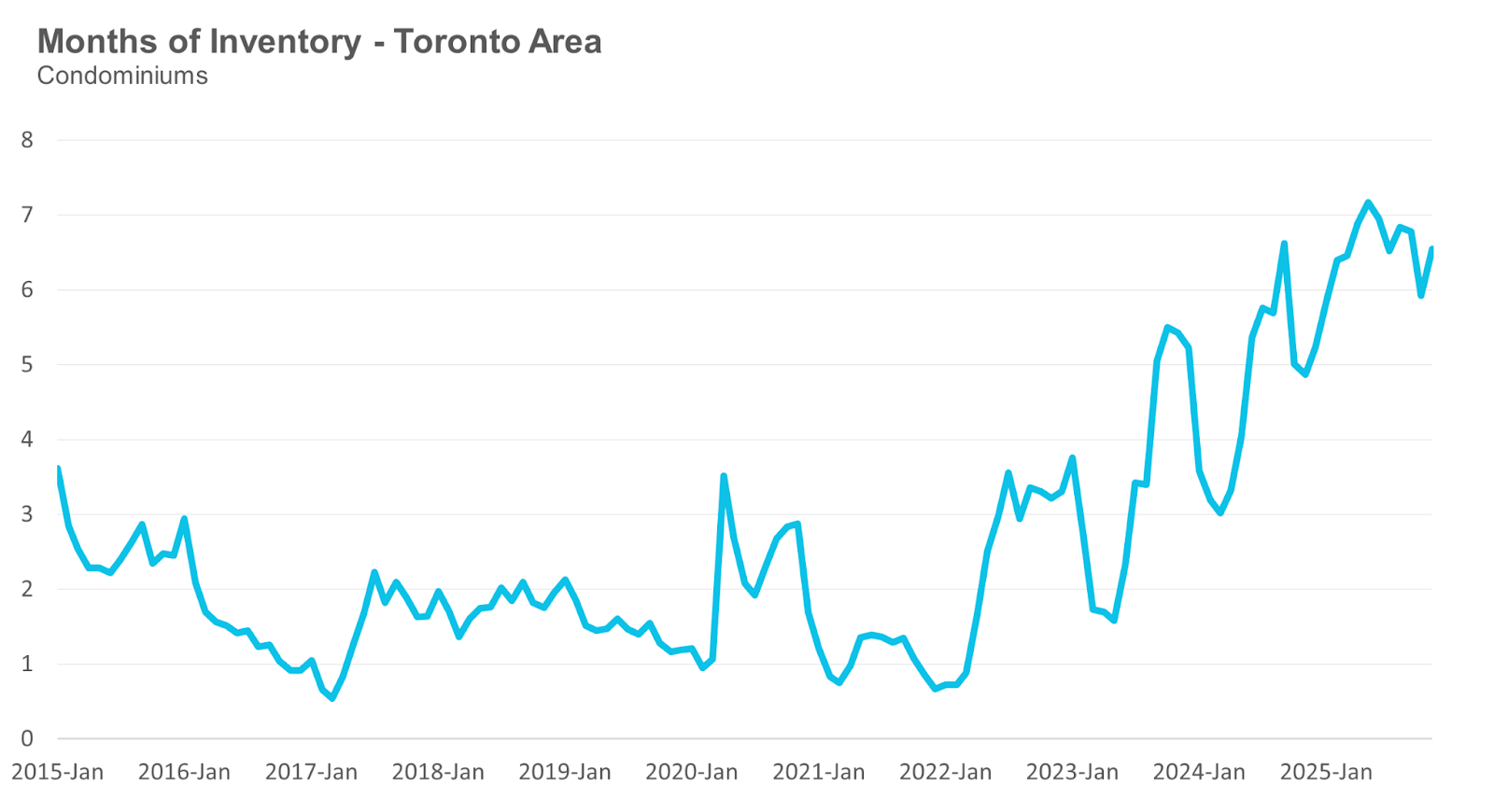
The Months of Inventory ratio (MOI) looks at the number of homes available for sale in a given month divided by the number of homes sold in that month. It answers the following question: If no more homes came on the market for sale, how long would it take for all the existing homes on the market to sell, given the current level of demand? The higher the MOI, the cooler the market is. A balanced market (a market where prices are neither rising nor falling) is one where MOI is between four to six months. The lower the MOI, the more rapidly we would expect prices to rise.
While the current level of MOI gives us clues into how competitive the market is on-the-ground today, the direction it is moving in also gives us some clues into where the market November is heading.
The MOI for houses increased to 4.5 in November.
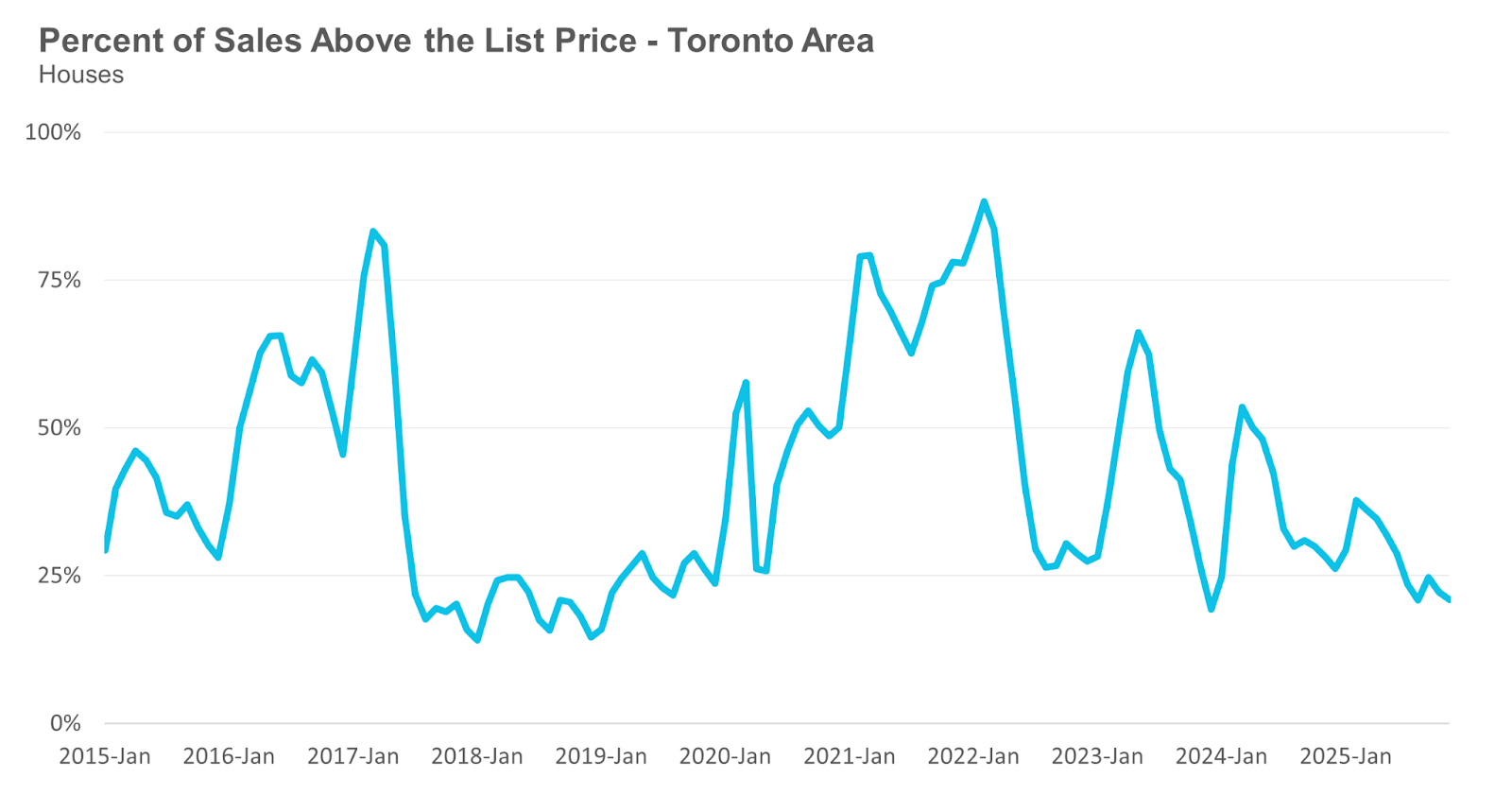
The share of houses selling for more than the owner’s list price fell to 21% in November.
The average price for a house in November 2025, $1,241,583, was down 9% from the same month last year.
The median house price in November was $1,050,000, down 10% over last year.
The median is calculated by ordering all the sale prices in a given month and then selecting the price at the midpoint of that list such that half of all home sales are above that price and half are below that price. Economists often prefer the median price over the average because it is less sensitive to big increases in the sale of high-end or low-end homes in a given month, which can skew the average price.
Condo Statistics
Condo (condominiums, including condo apartments, condo townhouses, etc.) sales in the Toronto area in November 2025 were down 21% compared to the same month last year.
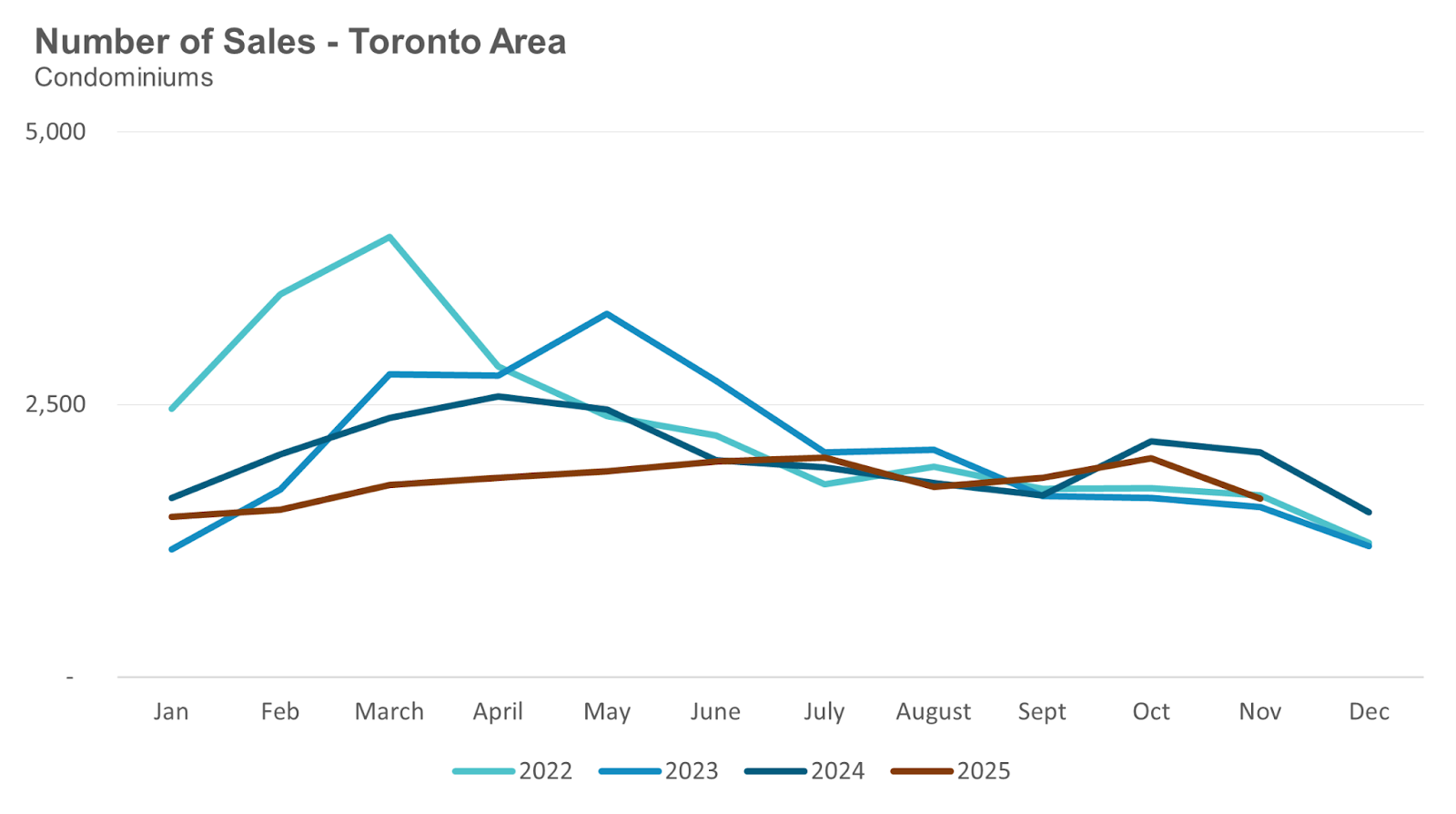
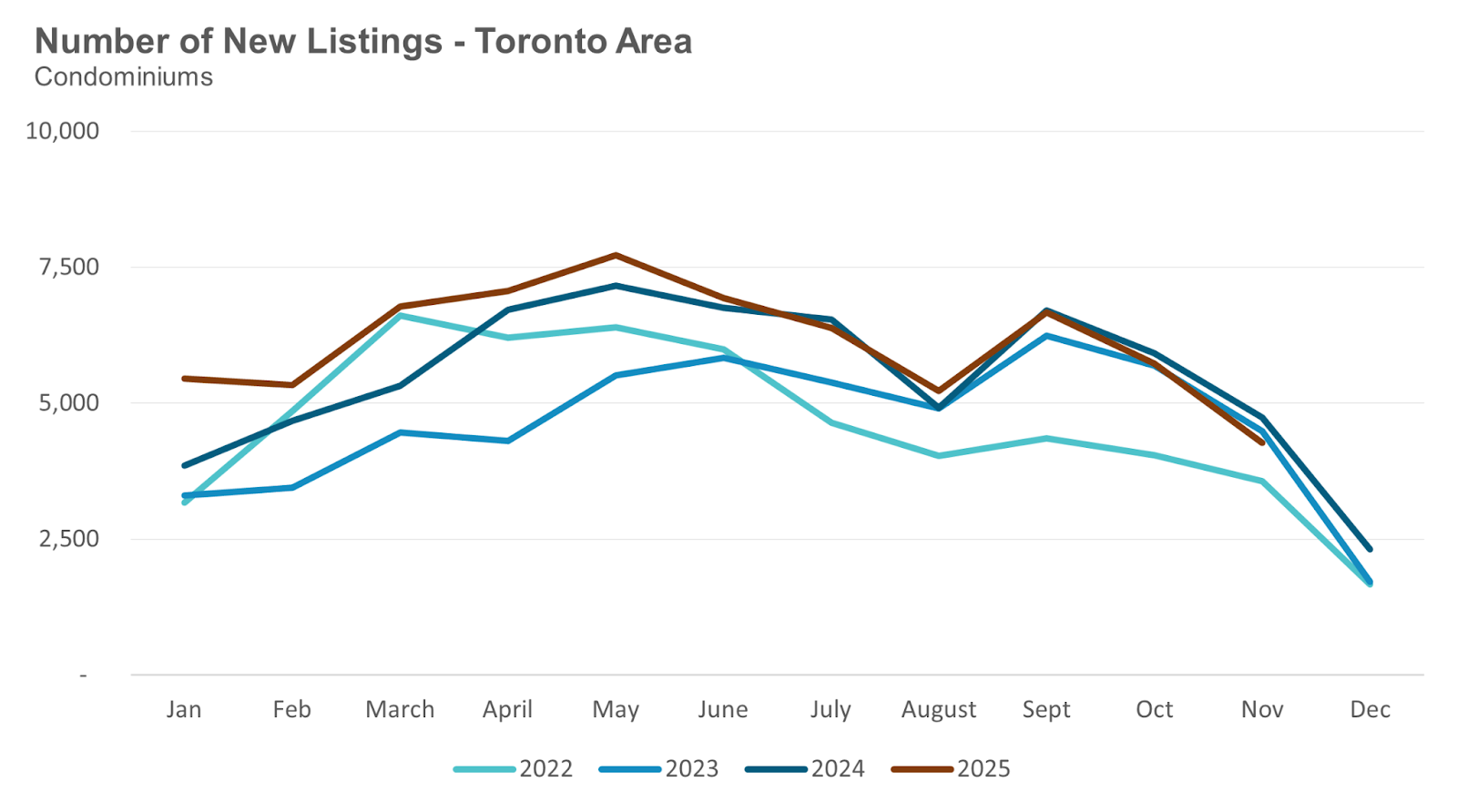
New condo listings were down 10% in November over last year.
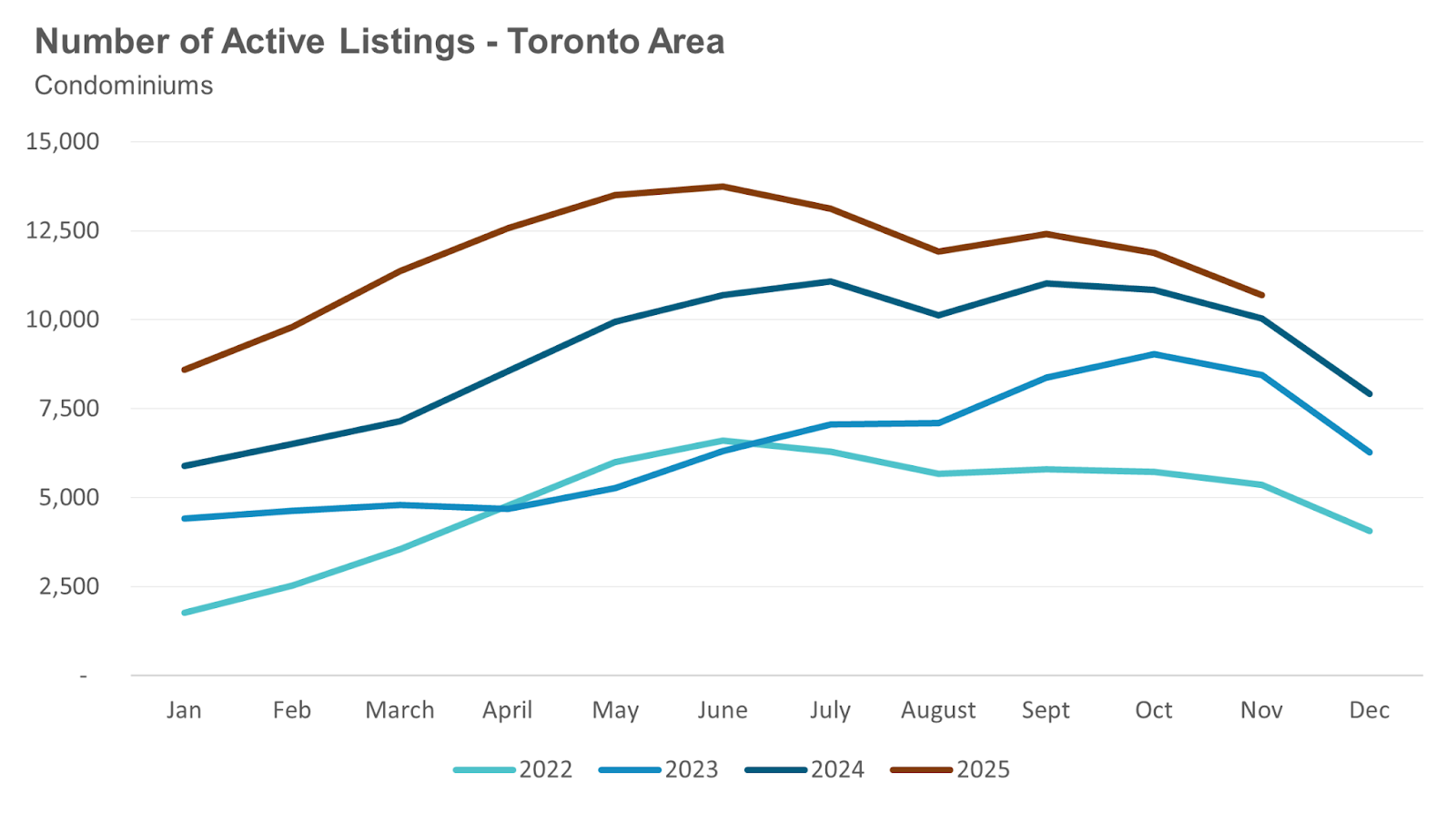
The number of condos available for sale at the end of the month, or active listings, was up 7% over last year.
Condo months of inventory increased to 6.5 MOI in November.
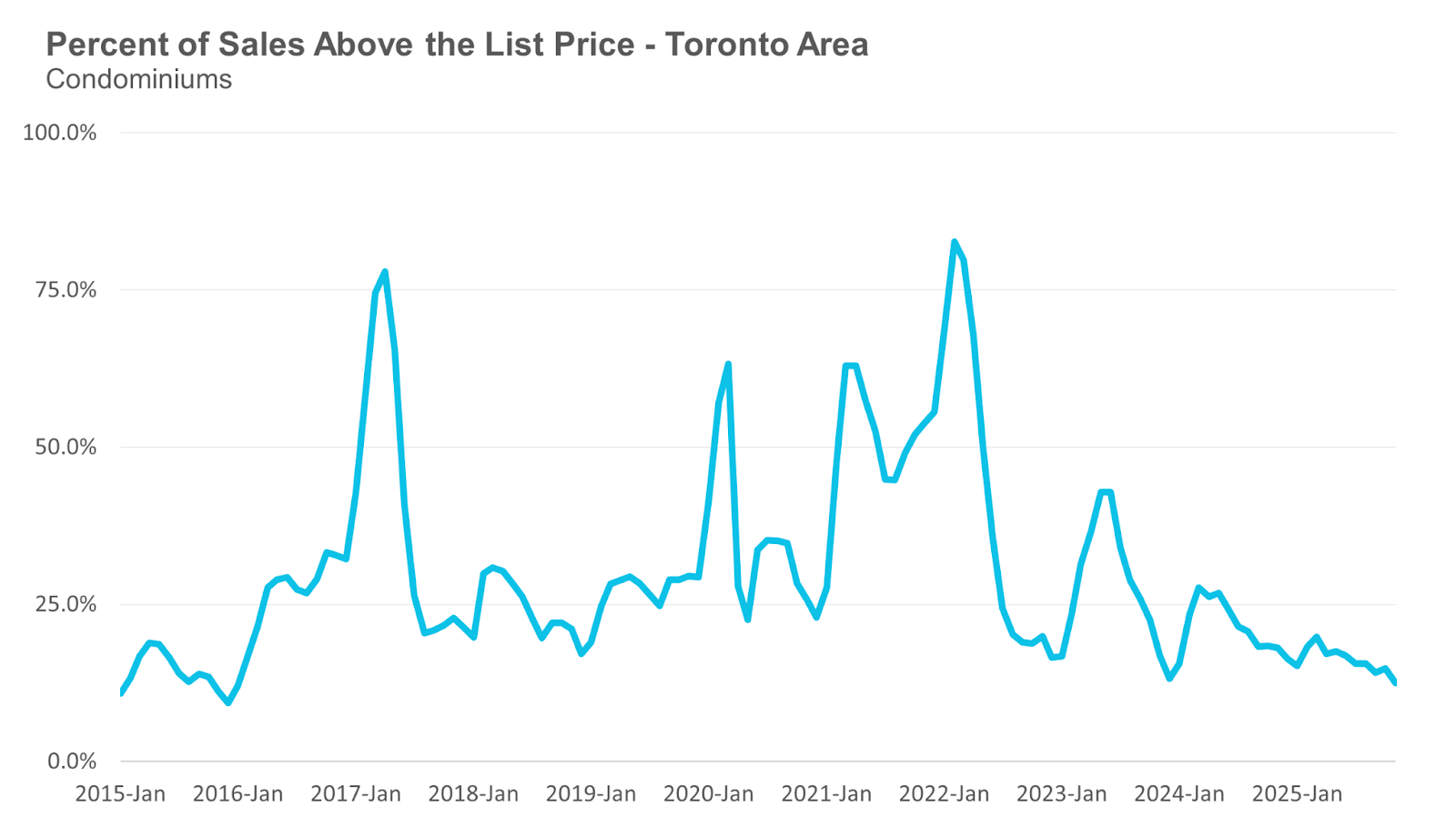
The share of condos selling for over the asking price increased to 13% in November.
The average price of a condo in November was $676,494, down 4% from last year. The median price was $589,500, down 8% from last year.
John Pasalis is President of Realosophy Realty. A specialist in real estate data analysis, John’s research focuses on unlocking micro trends in the Greater Toronto Area real estate market. His research has been utilized by the Bank of Canada, the Canadian Mortgage and Housing Corporation (CMHC) and the International Monetary Fund (IMF).
Have questions about your own moves in the Toronto area as a buyer, seller, investor or renter? Book a no-obligation consult with John and his team at a Realosophy here: https://www.movesmartly.com/meetjohn
Published: December 02, 2025