


Toronto’s effort to allow small apartment buildings on major streets is already running into a predictable problem: the approvals system hasn’t caught up with the policy.
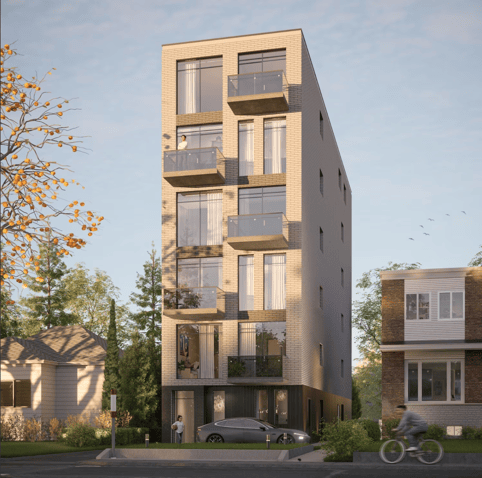
The Globe and Mail recently profiled a proposed six-storey multiplex on Pharmacy Avenue that was rejected by the Committee of Adjustment, in part because of concerns about “neighbourhood character.”
But this is exactly where the logic breaks down.
City council explicitly approved new policies in 2024 to allow gentle intensification along major roads like Pharmacy. If Toronto actually intends to add housing along transit corridors and arterial roads, those streets will inevitably change. That’s the point of the policy.
Protecting the existing “character” of major roads lined with postwar bungalows is fundamentally incompatible with building more housing in those locations.
The alternative is preserving low-density housing along major transit corridors, which undermines the very housing policies council has already approved.
Just as importantly, small-scale developers need predictability. If approvals hinge on the subjective views of committee members rather than the city’s planning framework, fewer builders will be willing to take the risk on these kinds of projects.
Toronto can’t say it wants more housing on major streets while allowing the approvals process to block the very projects those policies were designed to encourage.
John Pasalis is President of Realosophy Realty. A specialist in real estate data analysis, John’s research focuses on unlocking micro trends in the Greater Toronto Area real estate market. His research has been utilized by the Bank of Canada, the Canadian Mortgage and Housing Corporation (CMHC) and the International Monetary Fund (IMF).
Have questions about your own moves in the Toronto area as a buyer, seller, investor or renter? Book a no-obligation consult with John and his team at a Realosophy here: https://www.movesmartly.com/meetjohn
Published: February 05, 2026